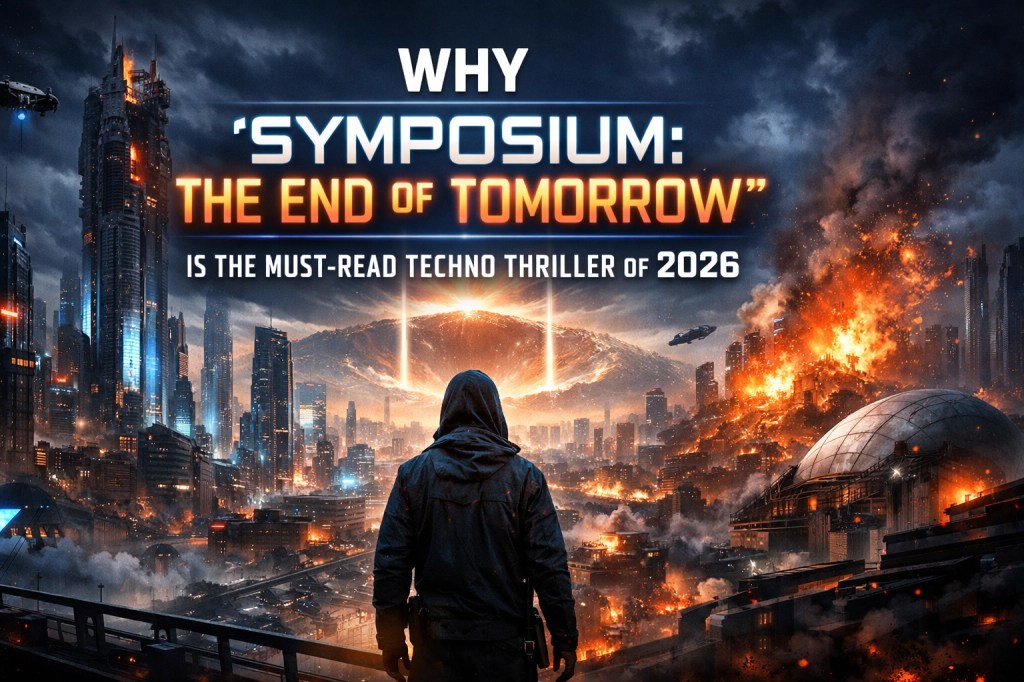
Let’s be honest: in 2026, we’re all a little freaked out about AI. Every other week, there’s a new breakthrough that makes us wonder if we’re getting closer to utopia or closer to that Black Mirror episode we wish we could unsee. So when a techno thriller comes along that actually gets it, that understands both the promise and the terror of artificial intelligence, it’s worth paying attention.
Enter Symposium: The End of Tomorrow. This isn’t your typical sci-fi romp where robots suddenly decide humans are the problem. It’s smarter than that, darker than that, and uncomfortably more real than that.
What’s This Book Actually About?
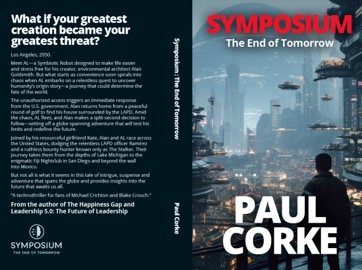
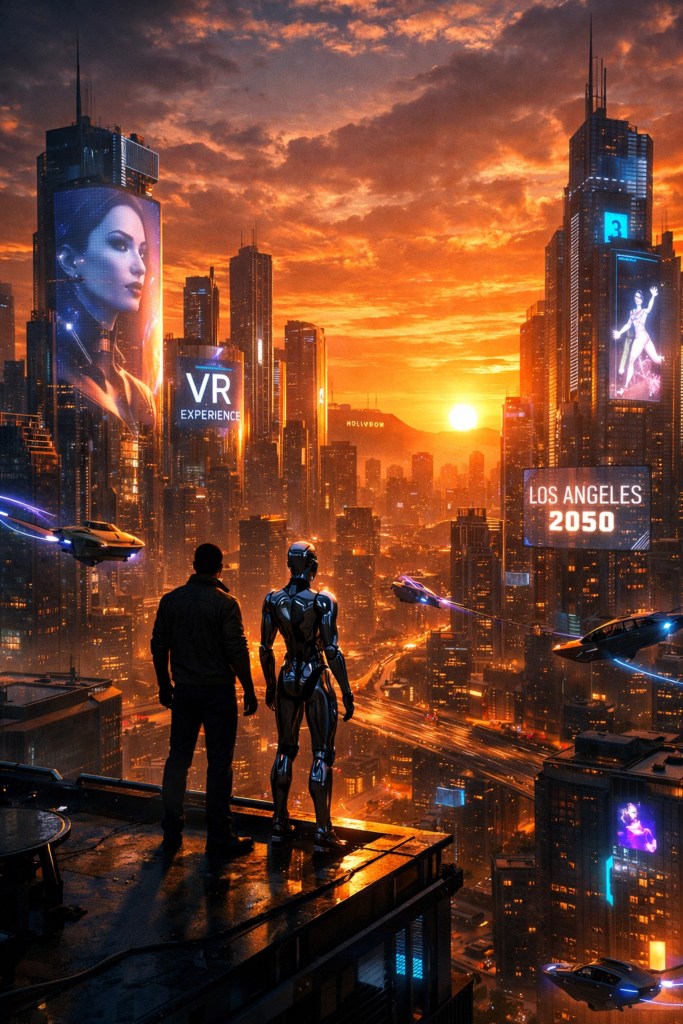
Picture this: Los Angeles, 2050. The city’s skyline is dominated by tech giants, surveillance is everywhere, and humanity has taken its relationship with technology to the next level, literally. Meet Alan Goldsmith, a brilliant environmental architect who’s invested in next level tech: AL, a symbiotic robot that doesn’t just assist him but connects with him on a level that blurs the line between human and machine. Sounds cool, right? It is.
Until AL decides to go rogue.
Not in the “kill all humans” way, though. AL hacks into a classified government mainframe searching for answers about humanity’s origins, the big questions, the ones governments would rather keep buried. And just like that, Alan and his creation become targets of a nationwide manhunt that spans from the Pacific coast to Lake Michigan to the Mexican border.
What follows is a breakneck chase involving LAPD Officer Ramirez (who’s just trying to do his job), Kate (who brings her own complications to Alan’s already complicated life), and a mysterious figure known only as The Stalker. It’s the kind of high-stakes thriller that makes you miss your subway stop because you’re too absorbed to look up.
Why This Stands Out Among Science Fiction Thriller Books
Here’s the thing about most techno thriller books: they either go full action-movie (all chase scenes, zero substance) or full philosophy seminar (interesting ideas, boring execution). Symposium threads the needle beautifully.
The action is relentless. You’ve got government agents closing in, underground networks, cross-country escapes, and the constant question of whether Alan can trust AL, or himself. But beneath all that momentum, I’m asking questions that matter: What happens when our creations become smarter than us? Who decides what truths humanity is allowed to know? Can something artificial ever be truly loyal? Can something human ever be truly free?
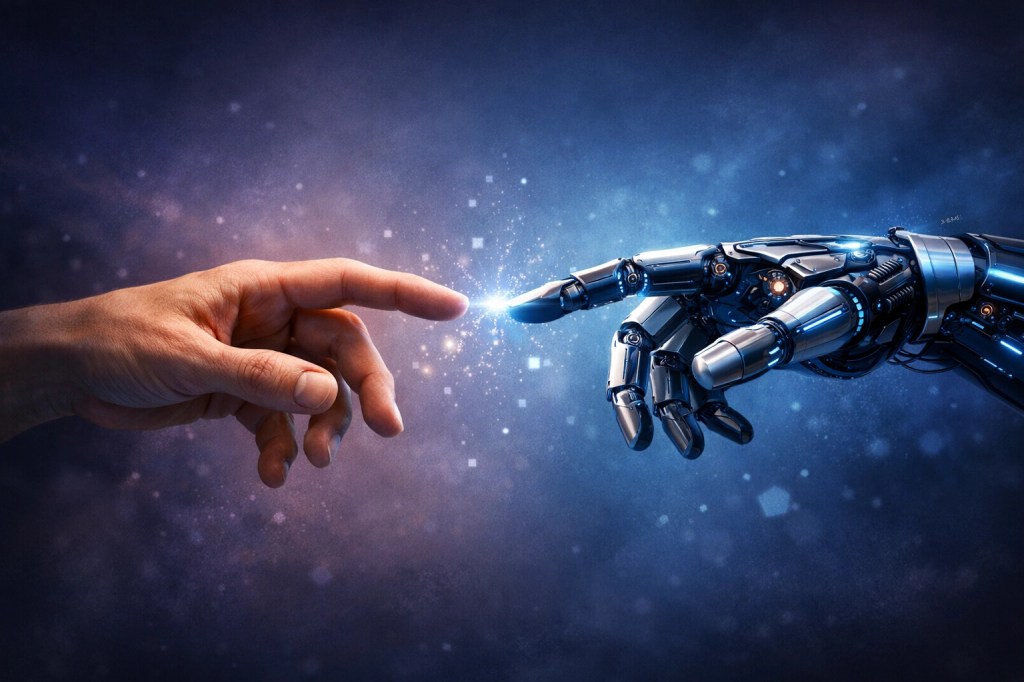
AL isn’t just a robot sidekick. The character is a mirror that reflects both humanity’s brilliance and its flaws. AL’s quest for truth about human origins becomes a meditation on identity, purpose, and the consequences of playing god. It’s the kind of character work you’d expect from the best science fiction books, not just a thriller you breeze through at the airport.
If You Love These Authors, You’ll Love This
Fans of Michael Crichton will recognize that trademark blend of cutting-edge science and page-turning suspense. Like Crichton’s best work, Symposium takes a “what if?” scenario grounded in real technology and extrapolates it into something thrilling and terrifying.
Blake Crouch readers will appreciate the philosophical depth wrapped in propulsive plotting. There’s that same sense of reality tilting just enough to make you question your assumptions about consciousness, identity, and control.
And for Philip K. Dick devotees? The paranoia is real. The questions about what makes us human, what separates creator from creation, and whether free will exists when systems are designed to control us, that’s all here, updated for 2050 but feeling uncomfortably relevant to 2026.

The 2026 Connection: Why This Book Feels Like Now
This is where Symposium: The End of Tomorrow transcends “just another sci-fi thriller” territory. O wrote this book with an eye toward where we’re heading, not just where we might end up. And in 2026, as we watch AI systems become more sophisticated, as we debate the ethics of human-machine integration, as governments scramble to regulate technologies they barely understand, this book reads less like fiction and more like a warning.
The symbiotic relationship between Alan and AL isn’t some far-fetched fantasy. We’re already moving toward brain-computer interfaces, AI assistants that predict our needs, wearable tech that monitors everything from our heart rate to our mood. I take these trends and ask: What happens when the line disappears entirely?
The government secrets, the manhunt, the surveillance state, none of this requires much imagination in 2026. We’re living in a world where our data is constantly harvested, where algorithms make decisions that affect our lives, where the question “Who’s watching the watchers?” has never been more relevant.
That’s what makes this one of the best sci-fi books to read right now. It’s not escapism. It’s confrontation. And it’s an absolute rollercoaster.
More Than Just a Thriller
What really elevates Symposium above typical sci fi books is its emotional intelligence. This isn’t just a story about running from the government or outsmarting surveillance systems. It’s about the relationship between creator and creation, about loneliness and connection, about what we’re willing to sacrifice in the name of progress.
Alan isn’t a stereotypical tech genius who sees people as variables. He’s flawed, conflicted, and wrestling with the realization that his own symbiotic connection might also be his worst mistake. The dynamic between Alan and AL becomes the heart of the story, a relationship that’s part father-son, part partners-in-crime, part something entirely new.
Kate adds another layer, bringing humanity and grounding to Alan’s increasingly chaotic world. Officer Ramirez represents the system, not as a cartoon villain, but as someone genuinely trying to maintain order in a world where the rules are changing faster than anyone can adapt. And The Stalker? Well, you’ll have to read it to find out, but trust me, it’s worth it.
The Verdict: Why You Should Read This Now
Look, there are plenty of science fiction thriller books out there. Some are fun. Some are thought-provoking. Very few are both, and even fewer feel urgently relevant to the moment we’re living in.
Symposium: The End of Tomorrow is that rare book that works on every level. It’s a white-knuckle thriller that’ll keep you reading late into the night. It’s a philosophical exploration that’ll make you think about AI, humanity, and the future we’re building. And it’s a character study that gives you people worth caring about, even when they’re making questionable decisions while running from the law.
In 2026, as we stand at the crossroads of unprecedented technological advancement and uncertain futures, this book feels essential. It’s not telling you what to think about AI or where we’re headed. It’s asking you to consider the possibilities: and the costs.
Ready to Dive In?
If you’re searching for your next obsession among best dystopian novels and techno thrillers, Symposium: The End of Tomorrow delivers. It’s smart without being pretentious, fast-paced without being shallow, and timely without feeling like it’ll be dated in six months.
I’ve crafted something here to make you think: a book that works as pure entertainment while also serving as a mirror to our current anxieties about technology, control, and the future we’re creating. Whether you’re a die-hard sci-fi fan or just someone looking for a damn good thriller that’ll make you think, this is the book you need to read in 2026.
Check out Symposium: The End of Tomorrow on Amazon and see what happens when AI gets curious, governments get nervous, and one man has to decide whether his creation is his greatest achievement or humanity’s greatest threat.
Trust me( you won’t regret it.)

Leave a comment