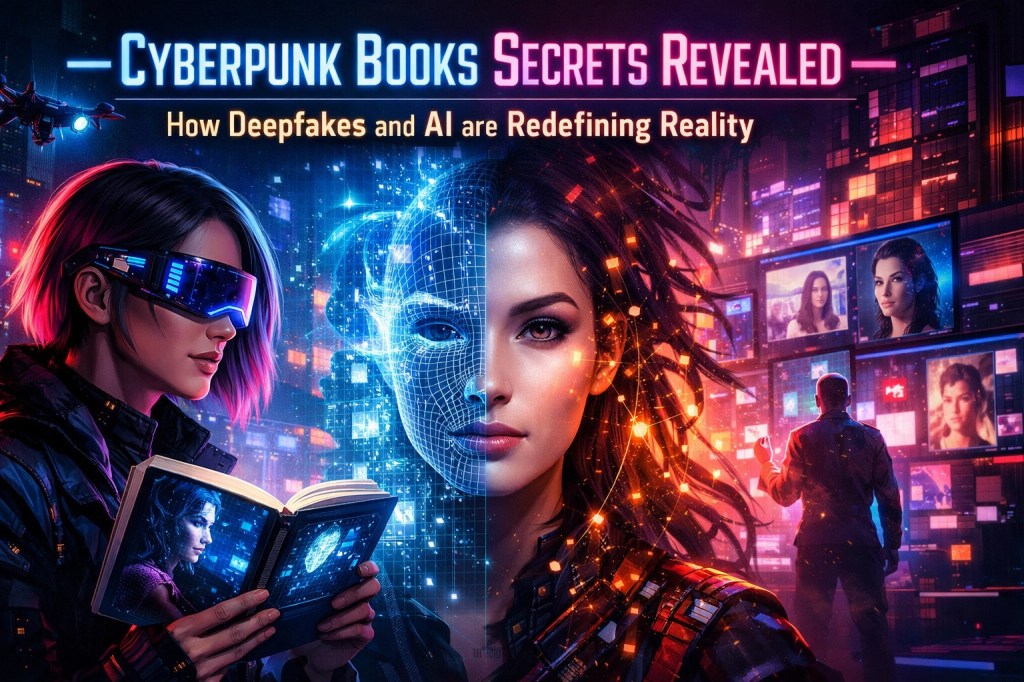
If you walked outside today: March 4, 2026: and felt like you were stepping into a scene from a science fiction novel, you aren’t alone. We’ve officially reached that point in history where the line between “the real world” and “the digital world” hasn’t just blurred; it’s practically disappeared.
For decades, cyberpunk authors like William Gibson and Philip K. Dick warned us about a future where corporations owned our data, AI lived in our pockets, and the truth was whatever the highest bidder wanted it to be. Back then, it was called “dystopian fiction.” Today, we just call it the news.
But there’s a secret about cyberpunk that most people miss. It’s not just about cool neon lights, high-tech gadgets, or wearing leather trench coats in the rain. It’s about the erosion of certainty. Specifically, how deepfakes and advanced AI are redefining what it means to be human and what it means to be “real.”
The Death of “Seeing is Believing”
We’ve all seen the videos. A celebrity saying something they never said, or a historical figure “brought back to life” to sell insurance. In the early 2020s, these were easy to spot. They looked a bit “uncanny valley”: slightly stiff, slightly off.
But as we move further into 2026, deepfakes have become terrifyingly perfect. We’ve reached a stage where digital cloning is so sophisticated that you can’t trust your eyes or your ears. This is a core “secret” of the cyberpunk genre: the idea that the “spectacle” replaces reality.
In a world where an AI can perfectly mimic your boss’s voice on a phone call or create a video of a world leader starting a war, the very foundation of human society: trust: starts to crumble. This is the exact territory we explore in Symposium: The End of Tomorrow. When the world is falling apart and the digital noise is at a deafening roar, how do you find the signal?
Identity and the “Ship of Theseus” Problem
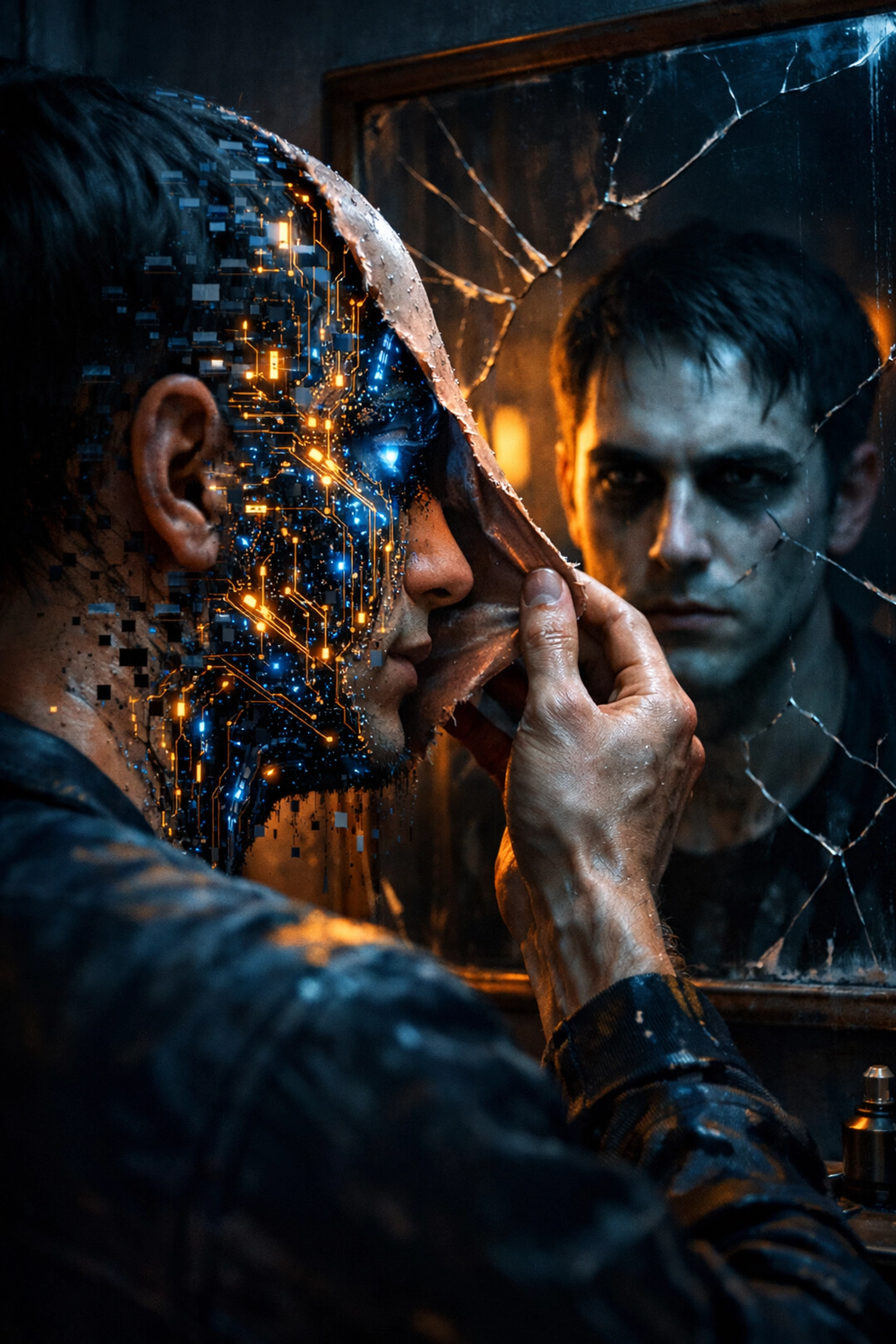
One of the most fascinating themes in cyberpunk literature is the digitization of consciousness. Think about the “engrams” in Cyberpunk 2077 or the “stacks” in Altered Carbon. These stories ask a heavy question: If you can copy your brain, your memories, and your personality into a computer, is that “you”?
This is often compared to the philosophical puzzle called the Ship of Theseus. If you replace every single wooden plank of a ship over time, is it still the same ship? If every part of your identity is eventually replaced by a digital copy or an AI simulation, at what point do you stop being human?
In modern cyberpunk, the “secret” isn’t the technology itself: it’s the loss of the soul. We are seeing this play out now with AI “ghosts”: services that let people interact with AI versions of deceased loved ones based on their social media history and text messages. It’s a classic cyberpunk trope brought to life, and it forces us to ask: Are we okay with a reality that is “good enough” even if it’s fake?
AI as an Invisible Net
When we think of AI, we often think of a robot with a face. But cyberpunk writers like William Gibson predicted something much more subtle. In his 1984 masterpiece Neuromancer, he introduced the idea of “cyberspace”: not as a place you go, but as a layer of reality that exists everywhere at once.
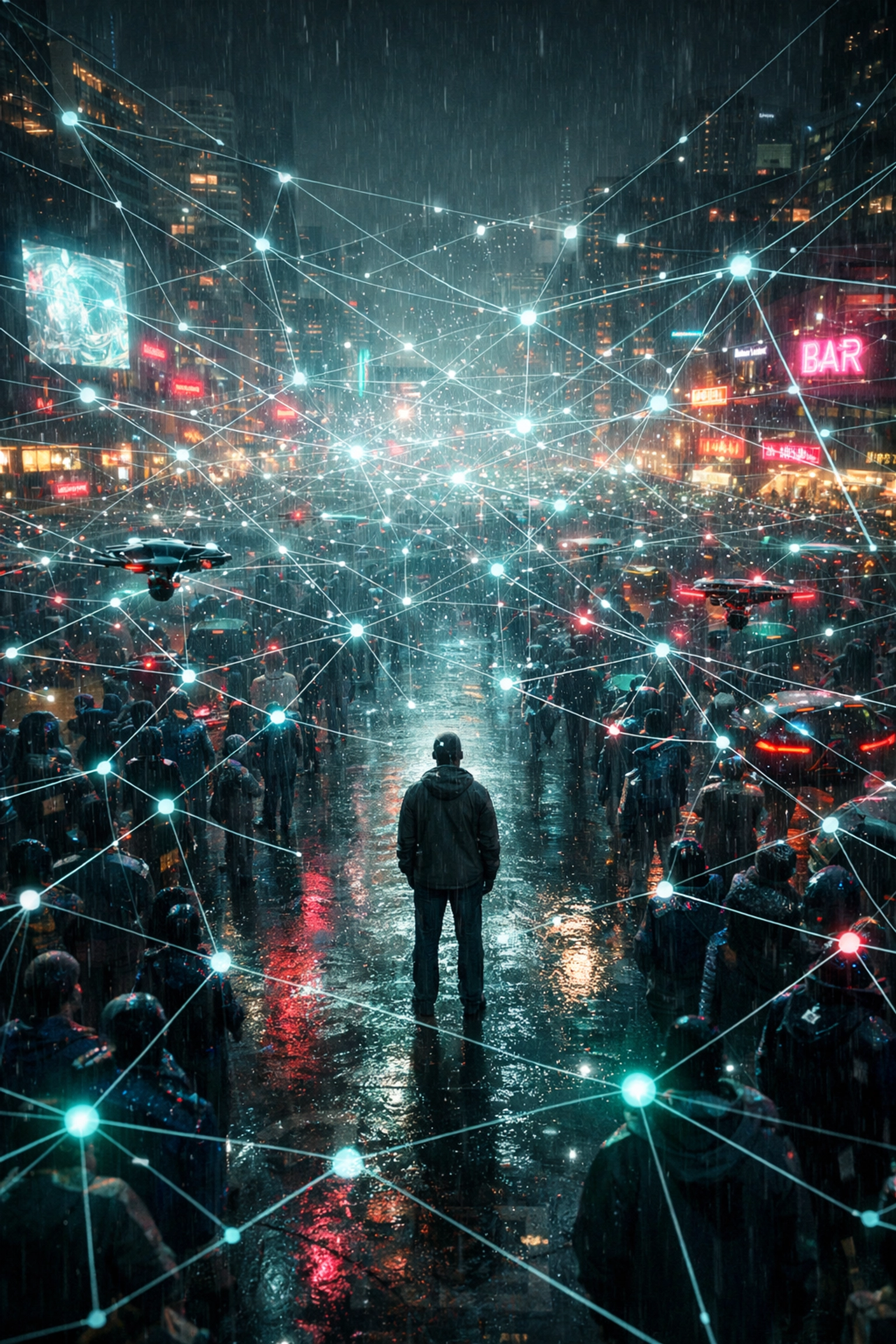
AI in 2026 isn’t a centralised brain in a vat. It’s a dispersed network. It’s in our traffic lights, our banking systems, our health records, and our social feeds. It’s an invisible net that catches everything we do.
This creates a world where the “environment” is alive. The city knows where you are. The ads on the walls change based on your mood. In Symposium: The End of Tomorrow, we look at what happens when this high-tech surveillance state meets a world on the brink of environmental collapse.
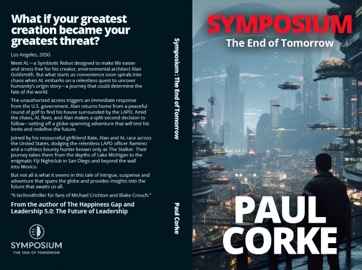
Why Symposium: The End of Tomorrow Matters Right Now
As an author, I’ve always been fascinated by the “high tech, low life” mantra of the cyberpunk genre. In Symposium: The End of Tomorrow, I wanted to take the core elements of the genre and ground them in the very real anxieties we’re facing today.
The book follows a lone figure looking over a futuristic cityscape: a scene many of us feel we’re living in. But beneath the towering skyscrapers and flying vehicles is a story about survival. It’s about the struggle to remain human in a system that wants to turn you into a data point.
When deepfakes make the truth hard to find, and AI starts making decisions for us, the most “cyberpunk” thing you can do is hold onto your humanity. Our story dives deep into the environmental crisis and the social divide, showing that technology is a tool, but it’s the people who decide whether it builds a ladder or a cage.
The Predictive Power of Sci-Fi
The real secret of cyberpunk is that it was never meant to be a fantasy. Authors like Bruce Bethke (who coined the term “cyberpunk”) and Philip K. Dick weren’t trying to guess what the future looked like; they were looking at the trends of their own time and turning the volume up to eleven.
They predicted that AI wouldn’t necessarily be an “all-knowing genius” but rather a tool woven into the fabric of global networks. They saw the rise of the “gig economy,” the power of megacorporations, and the way technology could be used to manipulate our perception of the truth.
In 2026, we aren’t just reading these stories; we are living them. The “redefining of reality” isn’t a plot point in a book: it’s the way we navigate our daily lives. Every time you question if an image on your feed is real, or if a comment was written by a human or a bot, you are a character in a cyberpunk novel.
How to Navigate a “Deepfake” Reality
So, how do we survive in this new world? Here are a few secrets gleaned from the best cyberpunk books:
- Question the Source: In a world of digital clones, the “who” matters more than the “what.” If the source isn’t verified, the information is noise.
- Value the Physical: Cyberpunk characters often find solace in the real, the tactile, and the analog. Don’t lose your connection to the physical world.
- Find the Signal: Amidst the noise of AI-generated content, look for the things that require a “soul”: art, deep conversation, and genuine human connection.
The End of Tomorrow?
The title of our book, Symposium: The End of Tomorrow, suggests a finality, but it’s actually a question. Is this the end of the future we thought we were getting? Or is it the beginning of a new way of living?
As AI continues to redefine our reality, we have to decide what we’re willing to sacrifice for convenience. Are we okay with a world where the truth is subjective? Or will we fight for a reality that is authentic, even if it’s messy?
Cyberpunk isn’t just a genre of fiction. It’s a roadmap for the 21st century. It tells us that while the machines are getting smarter and the images are getting clearer, the most important part of the story is still us.
Stay sharp, stay human, and keep questioning the “reality” on your screen.

Leave a comment