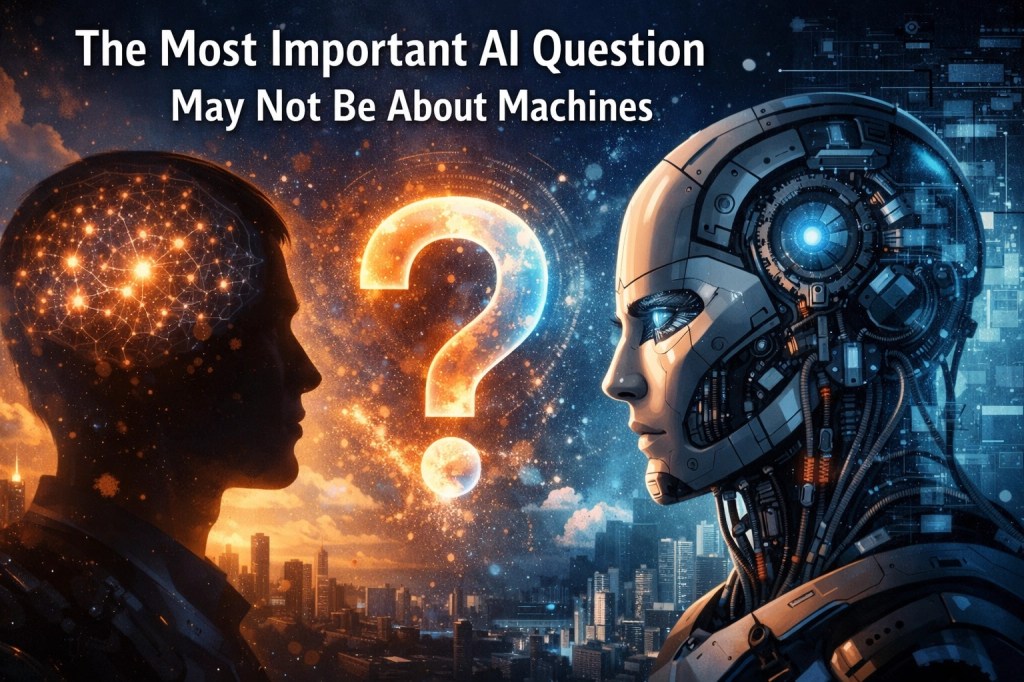
The most important AI question may not be about machines at all.
For centuries, intelligence has been one of the defining characteristics of being human. From the philosophers of Ancient Greece through to the Enlightenment, our ability to reason, learn, and create has been seen as the trait that separates humanity from the rest of the natural world. It was our “secret sauce.” If you could think, you were human. If you could solve complex problems, you were at the top of the food chain.
But today, that assumption is beginning to shift. We are living through a moment where the very thing we thought made us special is being replicated, automated, and: in some cases: surpassed.
Artificial intelligence can now write essays, analyze complex data, compose music, and assist in decisions once thought to require human judgment. It’s no longer a trope from the best sci-fi books; it’s our daily reality. The real question is no longer: “Will machines become intelligent?” That ship has sailed. The more interesting, and perhaps more frightening, question is: what happens when intelligence is no longer uniquely human?
The Redefinition of “Us”
Throughout history, moments like this have forced humanity to redefine itself. We’ve been here before, though the stakes feel different this time.
The agricultural revolution changed how we lived, moving us from wandering tribes to settled civilizations. The industrial revolution reshaped how we worked, replacing muscle power with steam and steel. The digital revolution transformed how we communicate, shrinking the world into a glowing screen in our pockets.
Now, the artificial intelligence revolution is asking us something deeper. It isn’t just about our hands or our voices; it’s about our minds. It’s asking: What actually makes us human?
Because if intelligence alone is the metric, we might be in trouble. If being human just means “calculating the best outcome” or “processing information,” then a server farm in a basement somewhere is already more “human” than you or I. But we know that’s not true. Intelligence alone has never fully explained humanity.
Calculation vs. Judgment
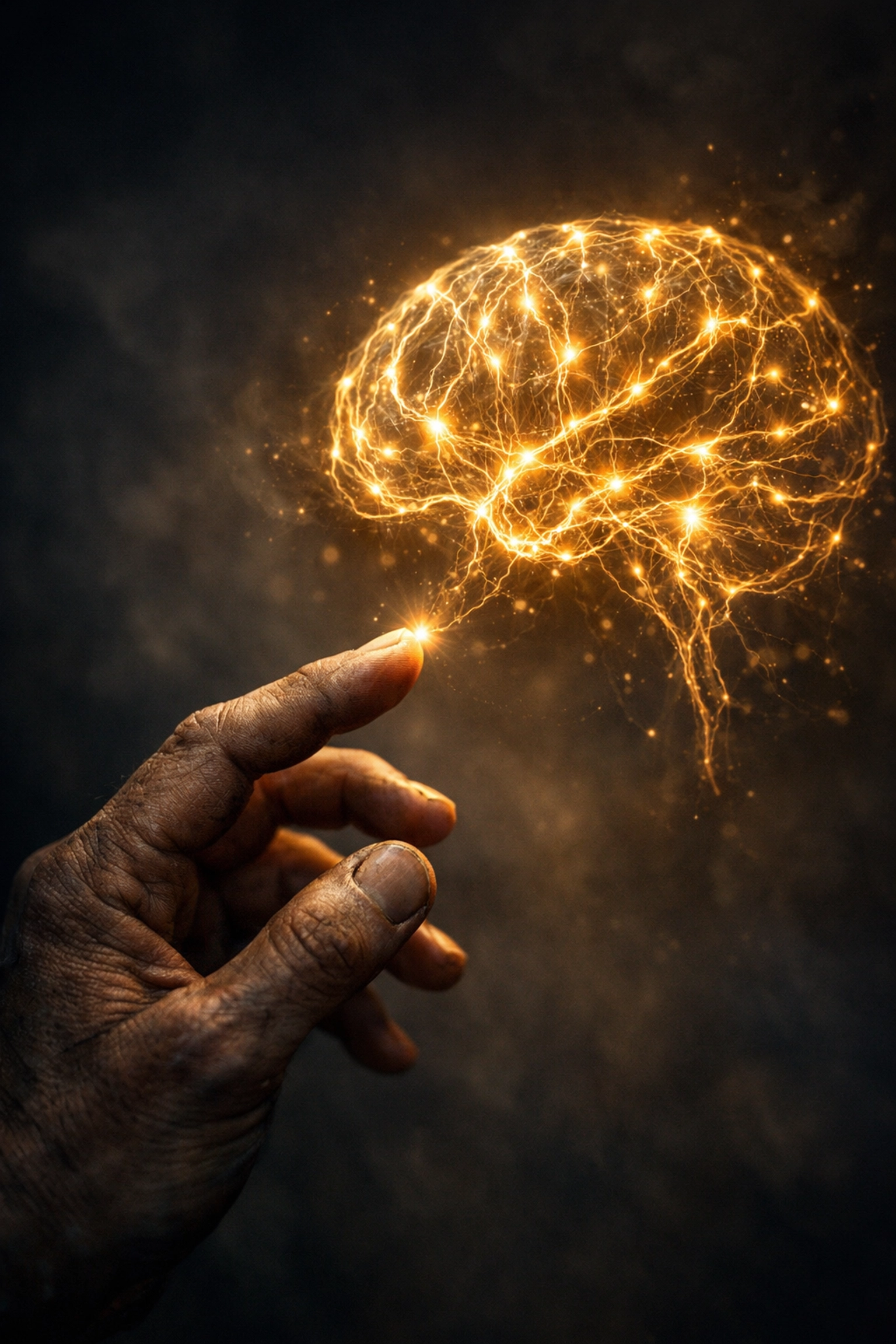
There is a massive difference between calculation and judgment. This is where the conversation gets real.
Think about the big decisions in life. Who gets parole? Who gets a mortgage? Who gets hired for a dream job? In many industries, we are turning these decisions over to algorithms because they feel “objective.” They don’t get tired, they don’t have bad moods, and they don’t have “gut feelings.”
But as philosophers and ethicists are starting to point out, this “veneer of objectivity” can be a trap. Algorithms don’t actually eliminate bias; they often just automate it. They look at the past to predict the future, which means they bake in all the old prejudices and systemic issues of the past.
When a human makes a judgment, there is accountability. There is a sense of moral weight. We have to ask ourselves: “Just because the data says X, is Y the right thing to do?” A machine can tell you the probability of an event, but it can’t tell you if that outcome is just.
Human judgment is indispensable because it’s messy. It’s colored by context, mercy, and an understanding of the human condition. Machines process information faster than we ever could, but they do not live lives. They don’t know what it feels like to lose a job, to fall in love, or to feel the weight of a heavy conscience.
The Value of the Human Experience
Human civilization is built not only on intellect, but on imagination, empathy, meaning, and story.
Machines do not accumulate memories, relationships, struggles, and interpretations of the world. They have data points; we have experiences. An AI can write a song about heartbreak by analyzing the frequency of minor chords and the vocabulary of a thousand sad poems, but it has never actually had its heart broken. It doesn’t know the hollow feeling in the chest or the way a specific smell can trigger a memory from ten years ago.
And that may be where our real value lies. Our “inefficiency”: our emotions, our illogical leaps of faith, our drive to create meaning where there is none: is actually our greatest strength.
Why We Need Stories Now More Than Ever
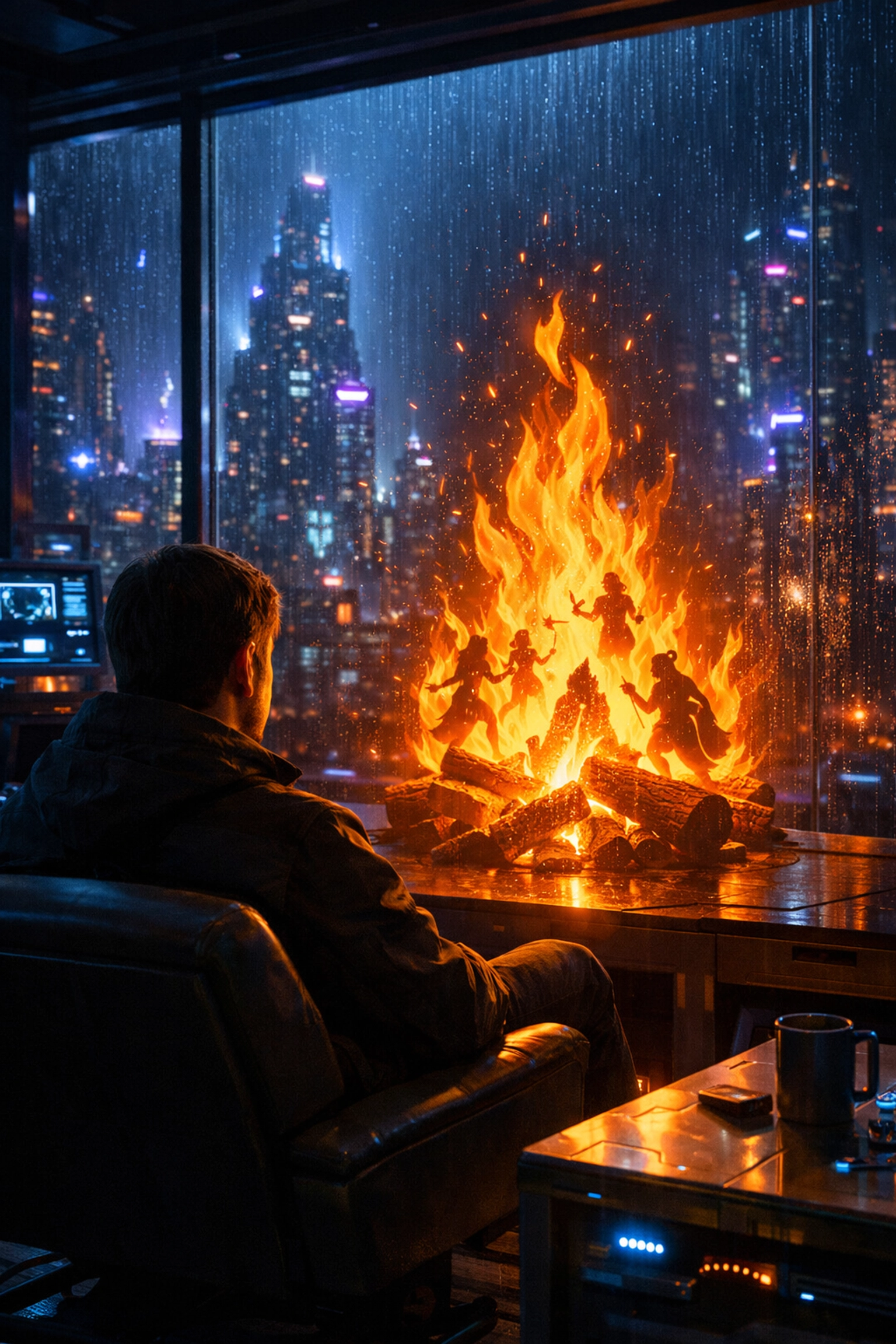
Stories have always helped societies make sense of change. From ancient myths whispered around fires to modern science fiction thriller books, storytelling has allowed us to explore possible futures before they arrive. It’s a sandbox for the soul.
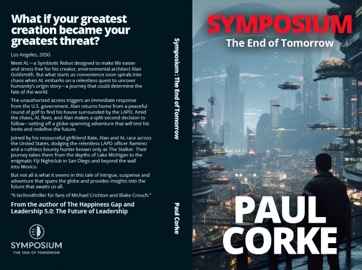
When I wrote Symposium: The End of Tomorrow, I didn’t just want to write about cool tech or scary robots. I wanted to explore a future shaped by artificial intelligence and the deeper human questions that come with it. In the world of techno thriller books, it’s easy to focus on the “techno” part: the gadgets, the hacking, the AI overloads. But the “thriller” part comes from the human stakes.
In Symposium, the characters have to navigate a world where the lines between man and machine are blurred. They have to decide what they are willing to sacrifice to stay “human.” It’s these dilemmas that make for the best sci-fi books. They force us to look in the mirror and ask: “If a machine can do my job, speak my language, and solve my problems… what is left of me?”
Redefining Our Future
Ultimately, the AI revolution may not be about machines at all. It may be about how humanity chooses to redefine itself in response.
We are being forced to move away from valuing ourselves based on productivity or raw intelligence. If a machine can produce more than us and think faster than us, we have to find a new yardstick for our worth.
Maybe we will move toward a society that values empathy more than efficiency. Maybe we will rediscover the importance of local community, manual craft, and face-to-face storytelling: things that don’t scale well for an algorithm but mean everything to a person.
The most important question of all is this: In a world of increasingly intelligent machines, what will make us more human than ever?
It might be our ability to wonder. It might be our capacity to forgive. Or it might be the fact that we tell stories to make sense of the dark.
As you look for your next read among the latest science fiction thriller books or techno thriller books, remember that the best stories aren’t just about the end of the world: they’re about the people who survive it and the values they carry forward.
The AI is here, and it’s getting smarter every day. But it’s still up to us to decide what that intelligence is for. It’s up to us to provide the meaning.
If you’re ready to dive deeper into these questions, I invite you to check out Symposium: The End of Tomorrow. It’s a journey into a future that’s closer than we think, where the most dangerous thing isn’t the code: it’s what we do with it.
Let’s keep the conversation going. Because while the machines are learning, we are still the ones living the story.

Leave a comment