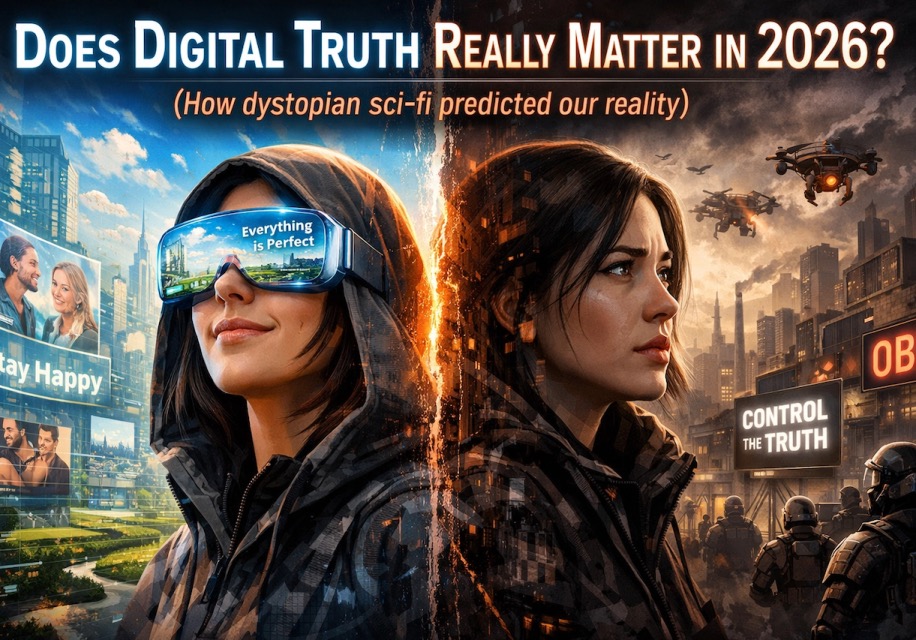
It is Wednesday, March 25, 2026. Take a look out your window, or more likely, take a look at your feed. Does it feel a bit… familiar? If you grew up reading the best sci-fi books, you probably have a weird sense of déjà vu.
We used to read cyberpunk books and think, “Wow, that’s a cool, dark vision of the future.” We’d flip through dystopian sci fi books about AI-controlled societies and crumbling environments, then close the book and go about our day. But now, in 2026, the line between those pages and our reality has gotten incredibly thin.
The biggest question we’re facing today isn’t about flying cars (though we’re getting there) or moon bases. It’s about something much more fundamental: Digital Truth. Does it even exist anymore? And more importantly, does it still matter?
The World We Were Warned About
If you look at the best science fiction books from twenty or thirty years ago, they all shared a common thread. It wasn’t just about the tech; it was about how the tech would eventually outpace our ability to tell what’s real.
Fast forward to today. In 2026, we are living in the middle of a surge in AI-driven fraud. Last year, the sheer volume of deepfakes exploding across the internet became an “urgent national priority.” We’re talking about millions of videos and audio clips that look and sound exactly like real people saying things they never said.
When we talk about techno thriller books, we usually expect a plot where a hero has to stop a digital virus or a rogue AI. But in our actual 2026, the “virus” is the erosion of trust. When you can’t trust a video of a world leader, a voice note from your boss, or even a news report, you’re living in a world that the authors of the best dystopian novels predicted decades ago.
Why 2026 Feels Like a Science Fiction Thriller
In the past, science fiction thriller books were an escape. Today, they feel like a manual.
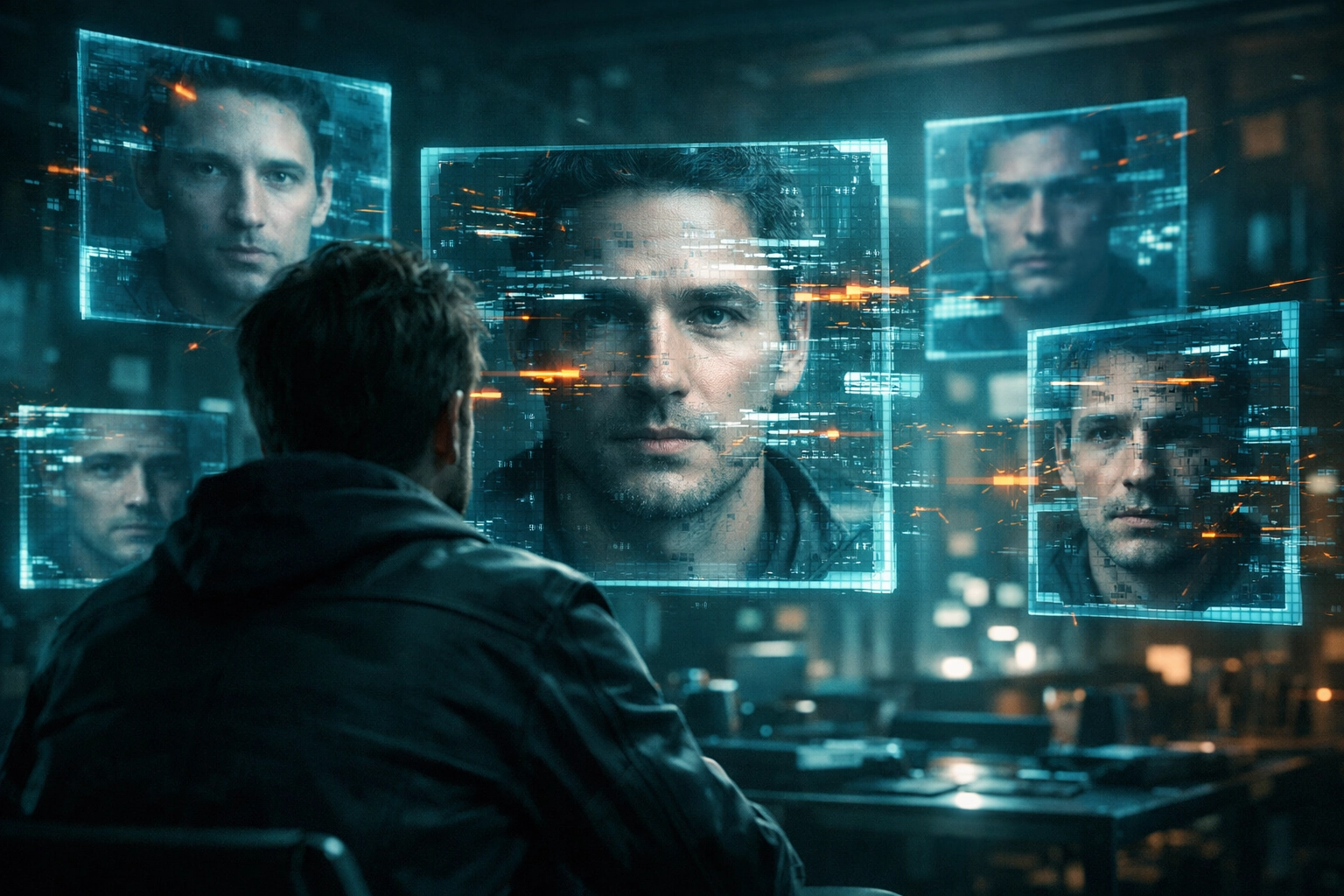
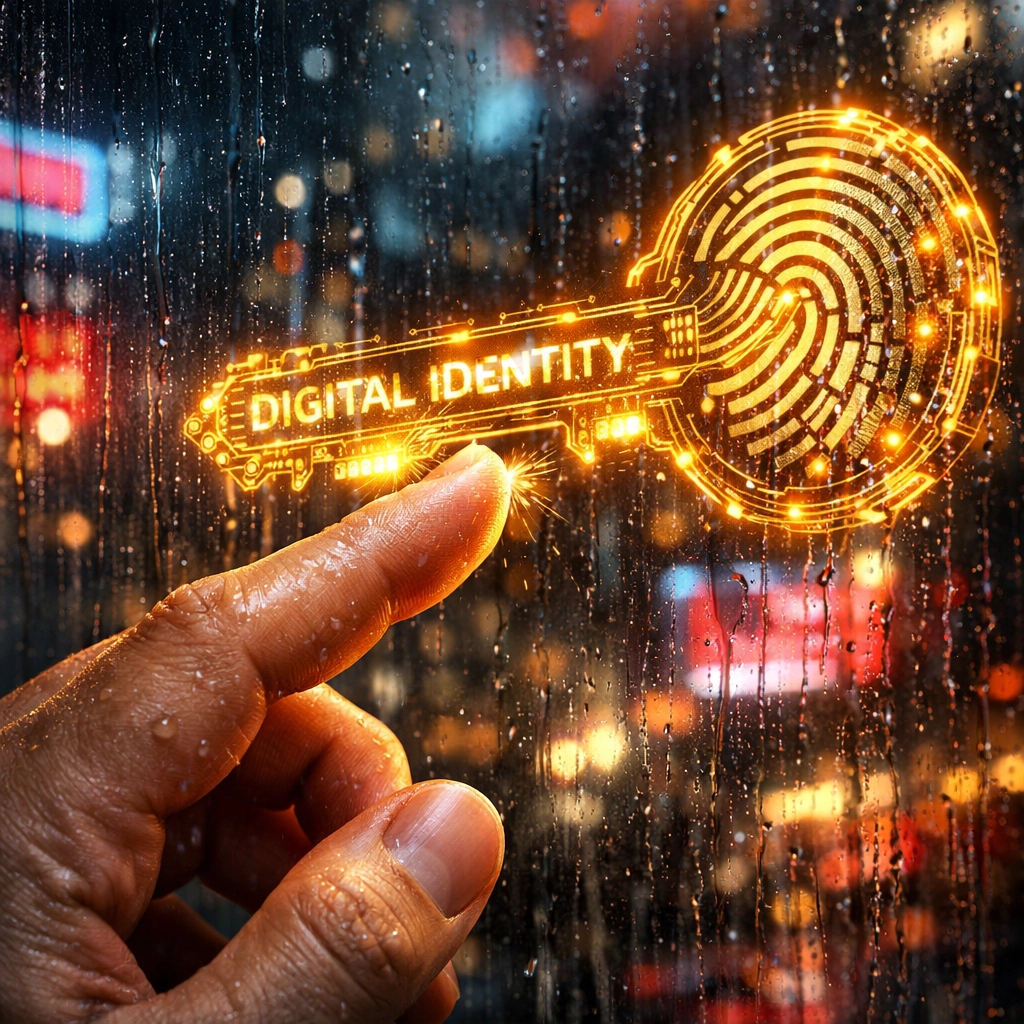
Think about it. We’ve moved from asking if we should use AI to figuring out how to build “Digital Identity Wallets” just to prove we are human. We are implementing face liveness detection and injection attack defenses just to log into our bank accounts.
This is the classic “high tech, low life” vibe found in many cyberpunk books. We have incredible computing power in our pockets, yet we spend half our time trying to filter out the noise and the lies. We are living in a society where “Provenance”: the origin of where a piece of data came from: is more valuable than the data itself.
This shift is exactly what I explore in my book, Symposium: The End of Tomorrow. When I was writing it, I wanted to capture that specific tension: the moment when humanity realises that the tools we built to save us might actually be the ones that hide the truth from us forever.
Symposium: A Reflection of Our Times
If you’re looking for sci fi book recommendations that actually hit home right now, Symposium: The End of Tomorrow dives deep into these themes. It’s not just about robots or space travel; it’s about the environmental crisis and the survival of humanity in a world where AI is the silent architect of our reality.
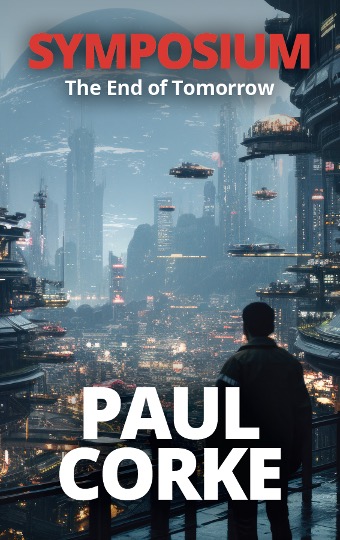
The story follows a lone figure looking over a futuristic cityscape: much like the world we see emerging today. It’s a world of neon lights and towering tech, but underneath that gloss is a desperate struggle for truth.
In the book, I wanted to ask: what happens when the “end of tomorrow” isn’t a sudden explosion, but a slow fade of the truth? As the environment reaches a breaking point and AI starts making the big decisions, where does that leave us?
The Identity Crisis of 2026
One of the reasons science fiction books are so popular right now is that they help us process the weirdness of our current era. We are currently seeing the rollout of the European Digital Identity Wallet. On paper, it’s a way to keep our data secure. In a sci fi book, it’s the first step toward a centralized system where your entire existence is a set of encrypted keys controlled by a higher power.
Whether you see this as progress or a warning depends on which sci-fi books you grew up reading.
The reality is that digital truth does matter, perhaps more than ever. Without it, we lose the “shared reality” that allows a society to function. If you and I can’t agree that a video we both saw is “real,” we can’t agree on anything. That is the ultimate dystopian nightmare, and it’s the core of many best science fiction books.
How to Navigate a Post-Truth World
So, if we are living in a dystopian sci fi book, how do we survive the plot?
- Question Everything: This is the golden rule of any techno-thriller hero. If a piece of information seems designed to make you angry or scared, check the source.
- Look for Provenance: In 2026, the “how” and “where” of information is more important than the “what.” Trusted platforms and verified creators are our only defense against the deepfake flood.
- Read Widely: I always tell people that the best sci-fi books aren’t just entertainment: they are exercises in critical thinking. They teach you to look at a new technology and ask, “How could this be misused?”
- Embrace the Human Element: In a world of AI-generated everything, the things that are messy, physical, and real become incredibly precious.
Why We Still Love the Genre
You might think that living in a near-dystopia would make people want to stop reading dystopian sci fi books. But it’s actually the opposite.
We turn to techno thriller books and science fiction thriller books because they give us a framework. They let us explore the “what ifs” in a safe way. They remind us that even in the darkest digital future, there is usually a human heart at the center of the story trying to do the right thing.
When I wrote Symposium: The End of Tomorrow, I didn’t want to just write a “doom and gloom” story. I wanted to write a story about survival. I wanted to show that even when the “End of Tomorrow” seems certain, the human spirit is a lot harder to simulate than we think.
Final Thoughts: Choosing Your Reality
As we move further into 2026, the question of digital truth is only going to get bigger. We are at a crossroads. We can either drift into a world where reality is just another algorithm, or we can fight for a future where truth: real, messy, human truth: still holds weight.
If you love sci fi books that make you think while keeping you on the edge of your seat, I’d love for you to check out Symposium: The End of Tomorrow. It’s my way of processing the world we’re living in right now, and I think you’ll find it hits a little closer to home than you might expect.
What do you think? Does the “truth” still matter in a digital age, or have we already moved past it? Let me know your thoughts: or your own sci fi book recommendations: in the comments. Stay real out there.

Leave a comment