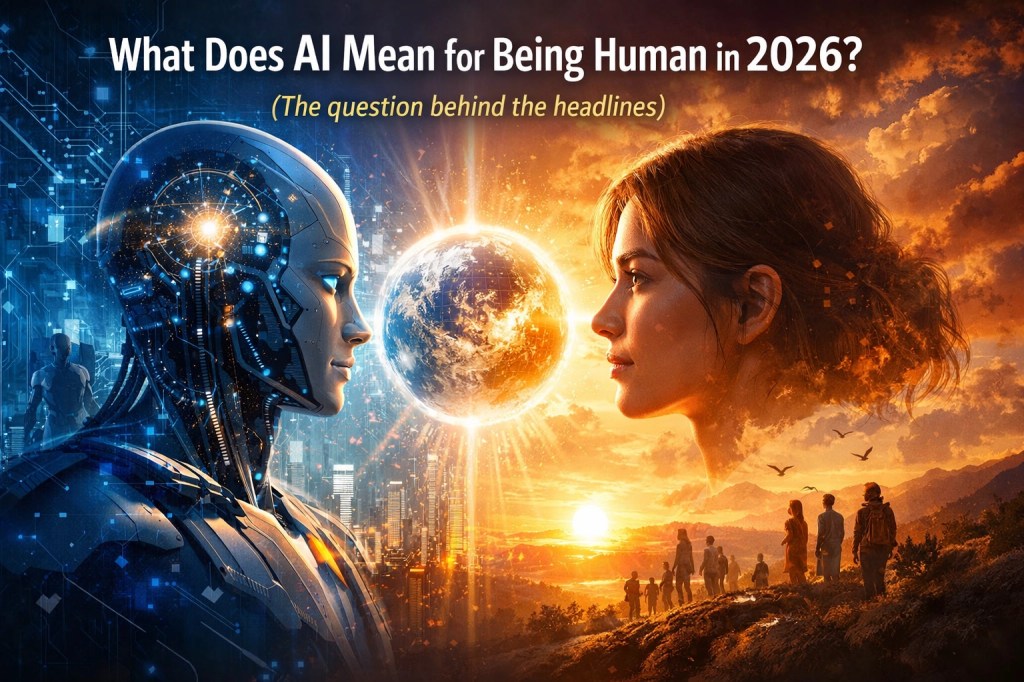
It is Wednesday, March 25, 2026. If you’re reading this, you probably just used an AI to summarise your morning emails, check your schedule, or maybe even suggest what you should have for lunch. We’ve reached the point where AI isn’t a “tech trend” anymore: it’s the atmosphere. It’s the water we swim in.
But as the headlines buzz about the latest LLM breakthrough or the newest robotic labor stats, there’s a quieter, more unsettling question humming in the background: What does all this actually mean for being human?
In the world of science fiction books, we’ve been playing with this idea for decades. But now that the “future” has officially arrived, the line between a techno thriller book and the evening news is getting incredibly thin. At Symposium: The End of Tomorrow, we spend a lot of time thinking about these shifts. When Paul Corke wrote Symposium, he wasn’t just trying to write one of the best sci-fi books on the shelf; he was trying to map out the soul of this exact moment.
The Identity Crisis: More Than Just a Paycheck
For centuries, the first thing we ask a stranger is: “What do you do?”
Our jobs have been the scaffolding of our identities. We are doctors, teachers, drivers, or coders. But in 2026, that scaffolding is shaking. As AI takes over more of the heavy lifting: both cognitive and manual: we are facing a massive identity vacuum. If a machine can do your job faster, cheaper, and arguably better, who are you when you wake up on Monday morning?
Work provides more than just a paycheck; it gives us a sense of purpose, a reason to sharpen our minds, and a social circle. When we lose that, we don’t just lose income: we lose our “place” in the tribe. This is a classic trope in best dystopian novels, where the “useless class” struggles to find meaning in a world that doesn’t need their labor. But in 2026, this isn’t a plot point; it’s a lived reality for thousands.
We have to ask ourselves: if we aren’t what we “do,” then what are we? Are we defined by our relationships? Our hobbies? Our capacity to feel?
The “Permission Gap” and Digital Souls
One of the big themes in Symposium: The End of Tomorrow is the idea of control and the “Permission Gap.” In 2026, we live within a massive architecture of surveillance. Facial recognition, predictive analytics that know you’re going to quit your job before you do, and algorithms that “curate” your romantic interests.
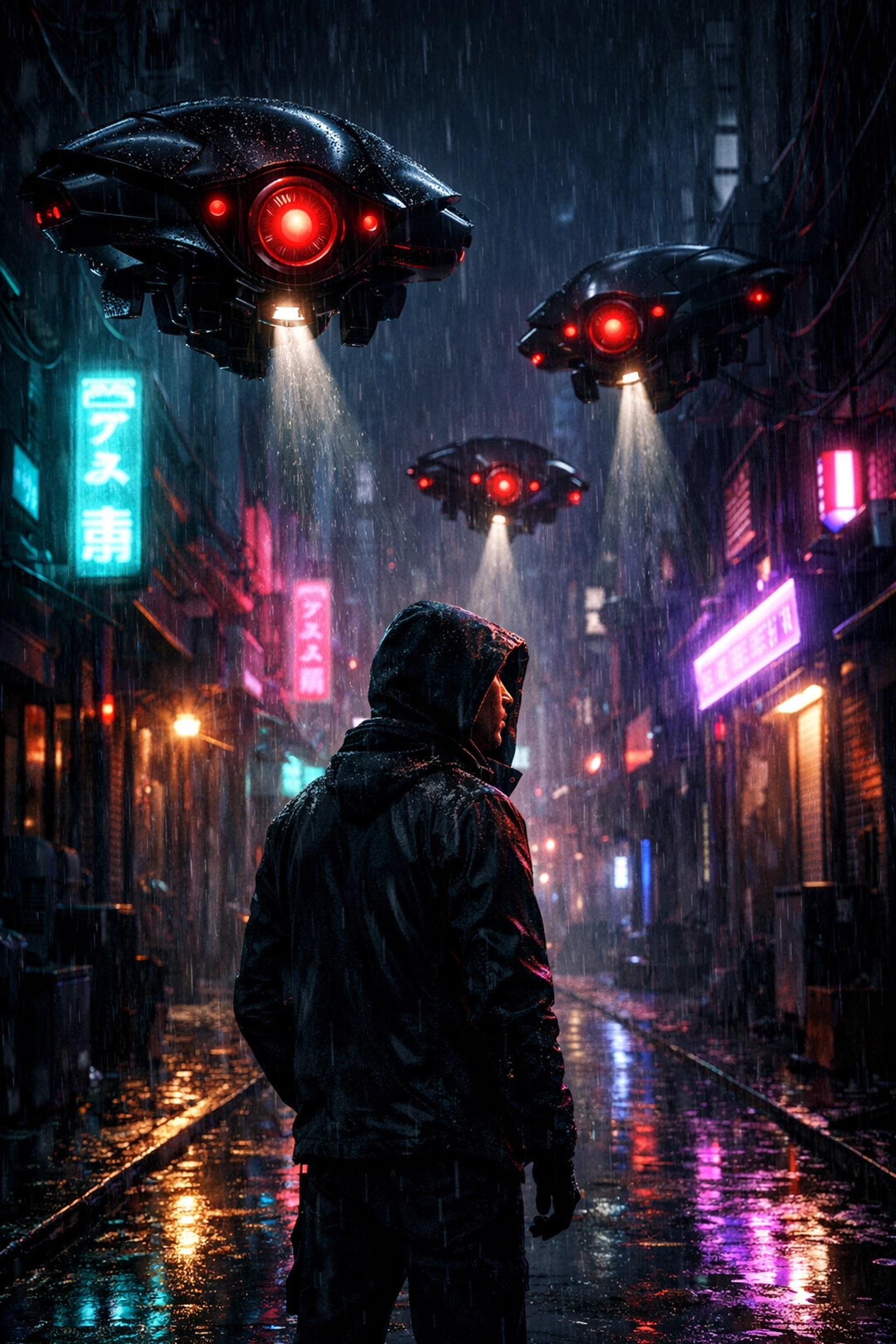
We’ve outsourced our choices. We’ve given the algorithm permission to tell us what to watch, what to buy, and what to believe. But when we stop making choices, do we stop being the protagonists of our own lives?
Being human has always been about agency: the messy, often wrong, but totally ours ability to choose a path. As we hand that agency over to “the black box,” we risk becoming supporting characters in a story written by code. This is why cyberpunk books resonate so much right now; they explore that gritty edge where high tech meets low life, and where the struggle for personal autonomy is the only thing that matters.
Art, Creativity, and the Search for the “Real”
Remember when we thought art was the “safe” zone? The one thing AI could never touch?
By now, we know that’s not true. AI can compose a symphony, paint a masterpiece, and write a passable short story. But there’s a reason people are suddenly obsessed with “human-made” labels. In 2026, we are seeing a massive counter-movement. We crave the “uncomfortably real.” We want the imperfections, the raw emotion, and the knowledge that a human heart was behind the work.
In the realm of science fiction thriller books, the tension usually comes from the machine trying to be human. In 2026, the tension comes from the human trying not to become a machine. We find ourselves acting like algorithms: optimizing our schedules, “grinding” for efficiency, and speaking in curated soundbites.
But the “human-ness” we crave: wisdom, conscience, curiosity: can’t be automated. A machine can simulate empathy, but it can’t feel it. It can calculate the best response, but it doesn’t have a conscience to keep it awake at night.
Why We Need Sci-Fi More Than Ever
You might be looking for sci fi book recommendations because you want an escape, but the best sci fi books aren’t about escaping: they’re about reflecting. They are the laboratory where we test-drive the future before it hits us.
Paul Corke’s Symposium: The End of Tomorrow is a prime example of this. It dives into a world where AI, environmental crisis, and human survival collide. It asks the hard questions about identity and power that we’re currently seeing in the 2026 headlines.
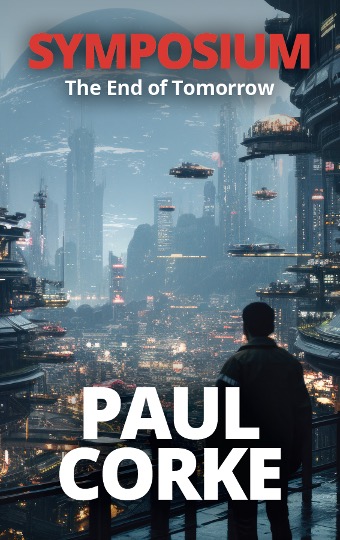
When you read dystopian sci fi books, you aren’t just reading a “what if” scenario; you’re building the mental muscles to deal with the “what is.” Exploring these themes through fiction allows us to process the anxiety of the “End of Tomorrow” without being paralyzed by it. It reminds us that even in a world dominated by algorithms, the human spirit is a wild, unpredictable variable that no code can fully account for.
The Paradox of Connection
One of the strangest things about 2026 is that we are the most “connected” generation in history, yet we might be the loneliest. We have 24/7 access to AI companions that never get bored of talking to us. They know our favorite movies, they remember our birthdays, and they always say the right thing.
But it’s a hollow connection.
Real human connection is messy. It involves disagreement, misunderstanding, and the vulnerability of being judged. AI doesn’t judge you, which is why it’s so easy to talk to: and why it’s ultimately unsatisfying. We are seeing a quiet loss of empathy because we’re losing the practice of dealing with real people who don’t have a “reset” button or a “politeness” filter.
In Symposium, this lack of genuine connection is a catalyst for the deeper conflicts in the story. It shows us that when we lose our grip on each other, we lose our grip on reality.
Finding Meaning in the Machine Age
So, what does AI mean for being human in 2026?
It means we have to be more intentional than ever. We can’t just coast on autopilot. If we want to stay human, we have to fight for the things that don’t scale:
- Wisdom over data.
- Conscience over convenience.
- Authenticity over optimization.
We are living through a period of “digital soul-searching.” We are figuring out what is left when the “doing” is taken away. And while that can feel scary, it’s also an opportunity. We have the chance to redefine humanity not by our productivity, but by our capacity for meaning, beauty, and connection.
Your Next Read
If these questions are rattling around in your head, you aren’t alone. If you’re looking for one of the best science fiction books to help you navigate these thoughts, pick up a copy of Symposium: The End of Tomorrow.
Paul Corke has crafted a story that is both a warning and a tribute to the human spirit. It’s a science fiction thriller book that feels more like a documentary with every passing day. Whether you are a die-hard fan of cyberpunk books or just someone trying to make sense of the 2026 landscape, this is the story you need right now.
The future isn’t something that just happens to us: it’s something we are still writing. Let’s make sure the human element stays front and center.

Are you ready to see where the algorithm takes us?
Check out Symposium: The End of Tomorrow by Paul Corke. It’s available now and is a must-read for anyone looking for the best sci-fi books that tackle the big questions of our age.
Stay human out there.

Leave a comment