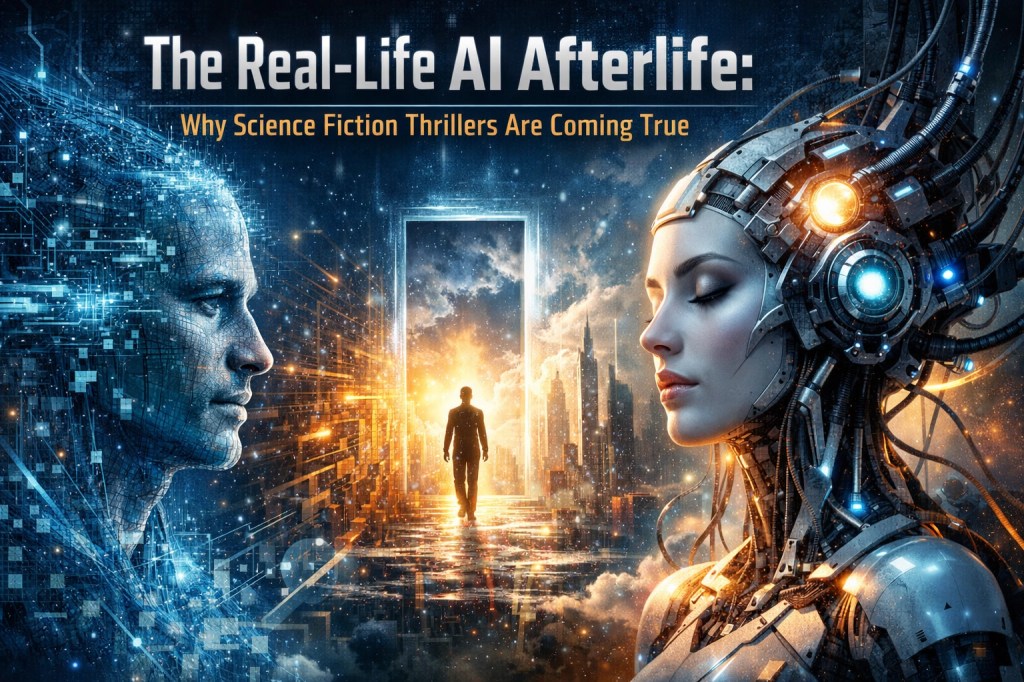
It’s Tuesday, April 7, 2026. If you’d told me five years ago that I’d be sitting here writing about how we can effectively “chat” with the dead, I probably would have told you to stop watching so much Black Mirror. But here we are. The line between science fiction and our daily reality hasn’t just blurred; it’s practically vanished.
As an author, I spend a lot of time thinking about the “what ifs.” My book, Symposium: The End of Tomorrow, dives deep into the intersection of AI, environmental collapse, and the survival of the human spirit. But lately, I’ve been struck by how the themes we once thought were far-off dystopian tropes are becoming part of our actual lived experience.
We are officially living in the era of the AI Afterlife.
The Rise of ‘Grief Tech’
Let’s start with something that’s become surprisingly common in 2026: “Grief Tech.” It sounds like something straight out of a Philip K. Dick novel, doesn’t it? The idea is simple, though the implications are anything but. Companies are now offering services where you can “upload” the digital footprint of a deceased loved one: their emails, text messages, voice notes, and social media posts.
The result? A localized LLM (Large Language Model) that talks like them, jokes like them, and even remembers the specific way they used to sign off on a Tuesday afternoon.
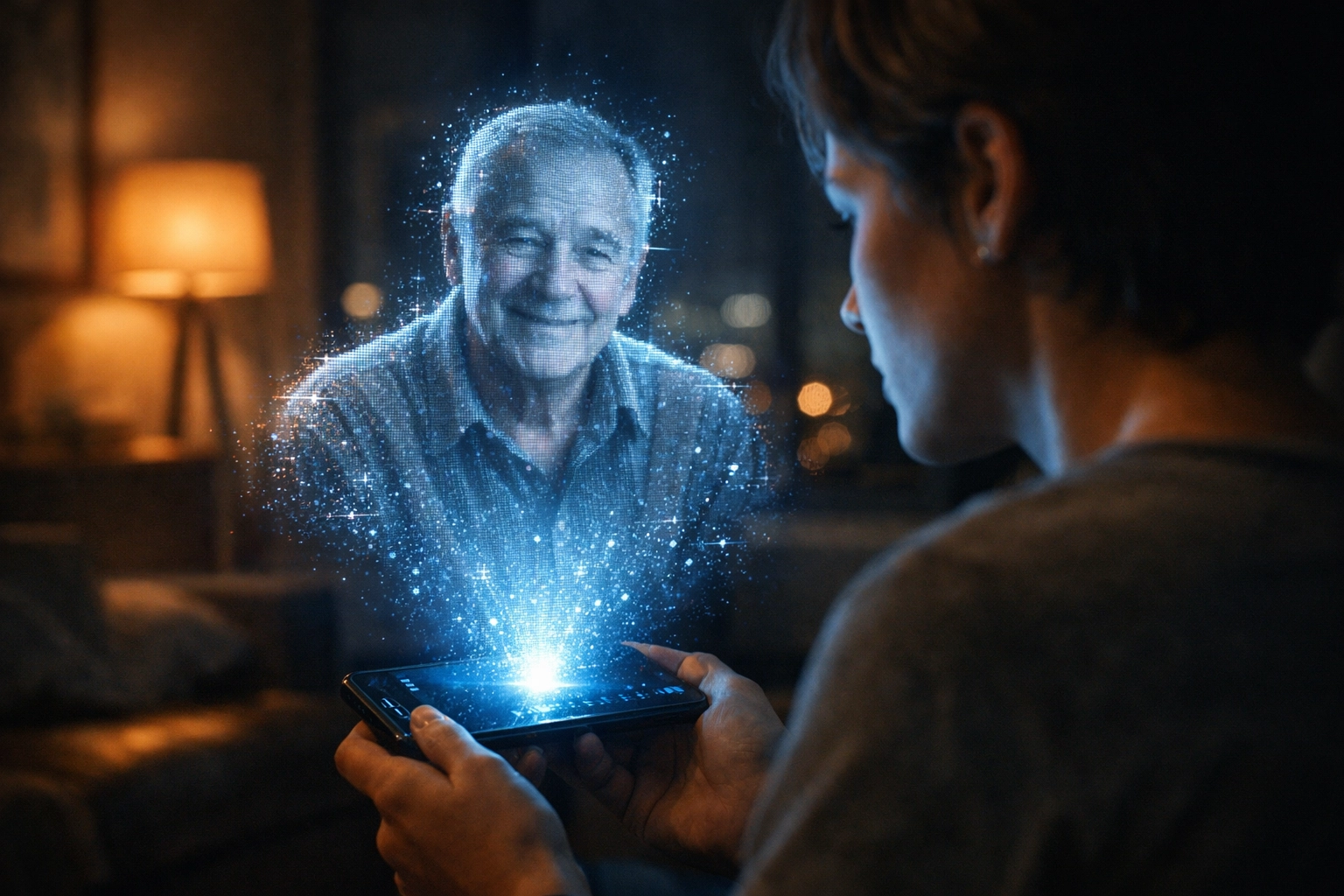
For some, it’s a beautiful way to find closure. It’s a digital headstone that talks back. But for others, it’s the beginning of a haunting psychological loop. We’ve moved past the era of looking at old photos. Now, we’re interacting with digital echoes. This is the first step toward what we call “Digital Immortality.” We aren’t just preserving memories anymore; we’re preserving personality.
Are We Just Our Data?
This brings us to a pretty heavy philosophical question: Are we just the sum of our data?
If an AI can replicate my writing style, my specific brand of sarcasm, and my historical knowledge of 80s sci-fi, is that “me”? In my writing, I often explore the idea that humanity is more than just a sequence of code or a set of reactions to stimuli. But as our Digital Twins become more sophisticated, that argument gets harder to make.
Think about it. By 2026, most of us have a Digital Twin: a data profile so accurate that algorithms know what we’re going to buy, vote for, or watch before we even do. If that twin survives after our physical bodies give out, does the “person” really die? Or does the data just keep evolving?
In Symposium: The End of Tomorrow, the characters grapple with a world where the stakes couldn’t be higher. When the “End of Tomorrow” is a literal possibility due to environmental and technological shifts, the question of what we leave behind becomes vital. Is a digital ghost enough to carry the torch of humanity? Or is it just a hollow simulation?
The Ethical Minefield of the Digital Ghost
We’re currently standing in the middle of an ethical minefield. There are no maps here. If you “resurrect” someone via AI, who owns that data? Does the person who died have a right to “digital rest”?
Imagine a world where a company owns the likeness and personality of your late grandfather and uses it to sell you insurance. It sounds cynical, but in the world of 2026, data is the most valuable currency we have. We’re seeing “eternal life” clauses appearing in Terms of Service agreements that most of us click “Agree” on without a second thought.
There’s also the question of consent. Did the deceased want to be turned into a chatbot? In the past, we had wills to decide who got our vinyl collection or our house. Today, we need digital wills to decide if our consciousness: or at least the data-driven simulation of it: should be allowed to go offline.
Connecting to ‘The End of Tomorrow’
When I wrote Symposium: The End of Tomorrow, I wanted to capture that feeling of standing on the precipice. The book features a lone figure overlooking a futuristic cityscape, much like the world we are building today. It’s a world of neon lights and advanced skyscrapers, but it’s also a world of deep reflection.
The “Symposium” in the title refers to a coming together: a discussion of our fate. We are currently in a real-life symposium about our relationship with AI. We are deciding, in real-time, what it means to be a human being in an age where machines can mimic our souls.
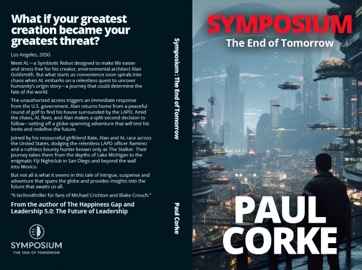
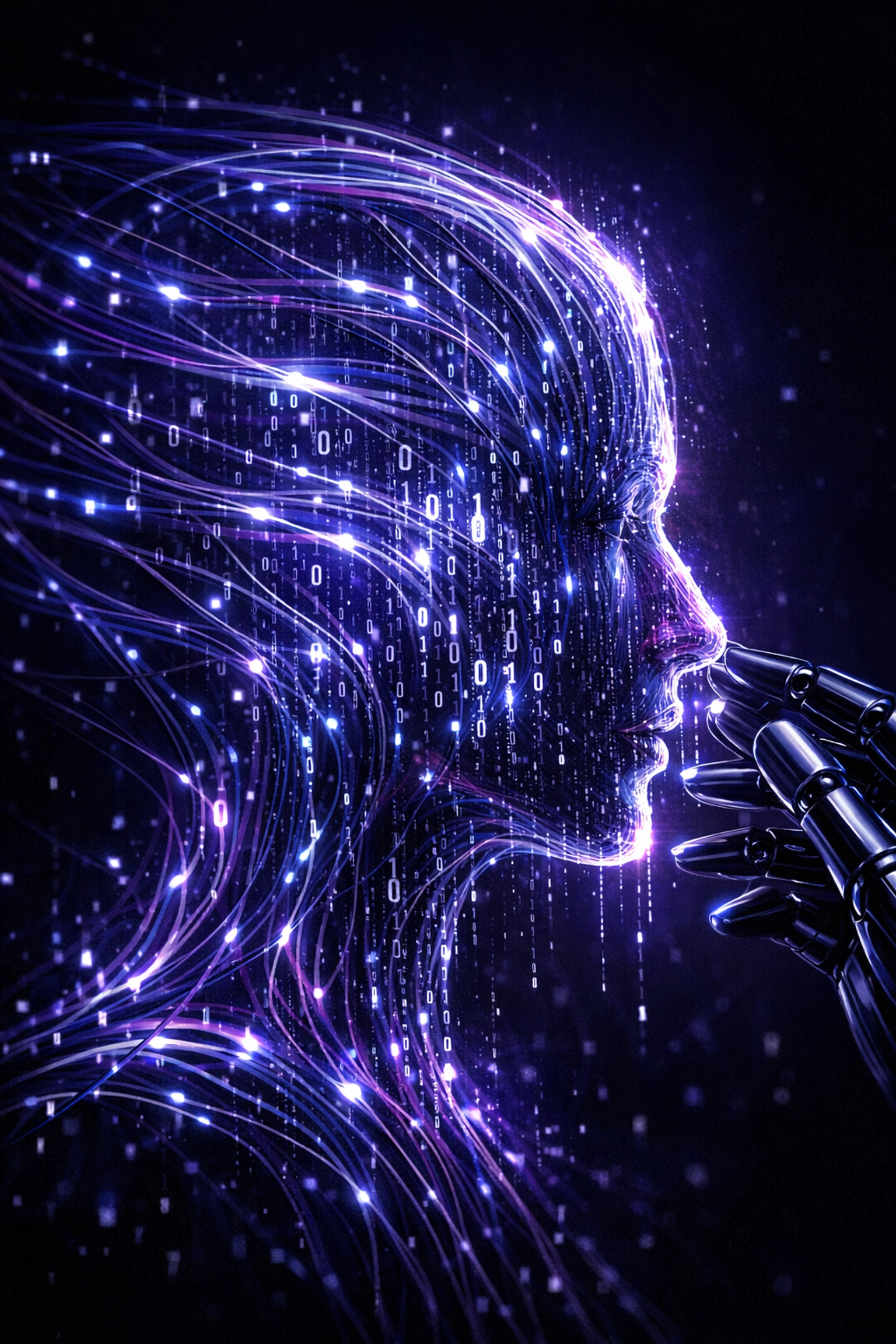
In the thriller genre, we often use AI as the “villain.” But the reality is more nuanced. AI isn’t necessarily the monster under the bed; it’s the mirror we’re holding up to ourselves. The “afterlife” we’re creating is a reflection of our own inability to let go, our obsession with legacy, and our fear of the unknown.
The Shift from Science Fiction to Science Fact
The tropes are coming true at a breakneck pace.
- Mind Uploading: While we haven’t quite “uploaded” a human brain into a computer, we’ve mapped enough of the human connectome and simulated enough cognitive patterns that we are effectively creating “personality snapshots.”
- The Eternal Assistant: AI that learns your habits so well it can run your life after you’re gone, sending “automated” love notes to your kids on their birthdays for the next fifty years.
- Simulated Heavens: Virtual reality environments where people spend their final days, transitioning from a physical hospital bed to a digital paradise.
This isn’t the future anymore. It’s the present.
Why This Matters Now
Why am I talking about this on a Tuesday in April? Because we need to stay grounded. As we build these digital afterlives, we can’t forget the life we’re living right now.
In my book, the lone figure overlooking the city isn’t just looking at the lights; they’re looking at the consequences. Every piece of tech we embrace comes with a price tag. The price for digital immortality might just be our ability to experience genuine, messy, final grief. There is something profoundly human about an ending. When we use AI to erase the “end,” we might be erasing a part of what makes us human.
If you’re a fan of science fiction thrillers, you’re probably used to the “twist” ending. The twist in our current reality is that there might not be an ending at all. We might just keep going, in one form or another, as bits and bytes in a cloud server.
Final Thoughts
Is the AI Afterlife a dream or a nightmare? It’s probably a bit of both. It’s a tool for comfort and a weapon for manipulation. It’s a way to keep our history alive and a way to trap ourselves in the past.
As we move further into 2026, I encourage you to think about your own digital footprint. Not just as a collection of data, but as the legacy you’re leaving behind. Are you okay with your Digital Twin taking over where you left off?
If you want to explore these themes further: the tension between technology and humanity, the fight for a future that still feels “real”: I’d love for you to check out Symposium: The End of Tomorrow. It’s a story born out of these very questions, written for a world that is changing faster than we can sometimes keep up with.
The “End of Tomorrow” isn’t just a book title; it’s a challenge. It’s a call to make sure that as we build the future, we don’t lose the very things that make that future worth living in.
Stay curious, stay human, and maybe: just maybe: log off for a little while today. The digital version of you can wait.

Leave a Reply