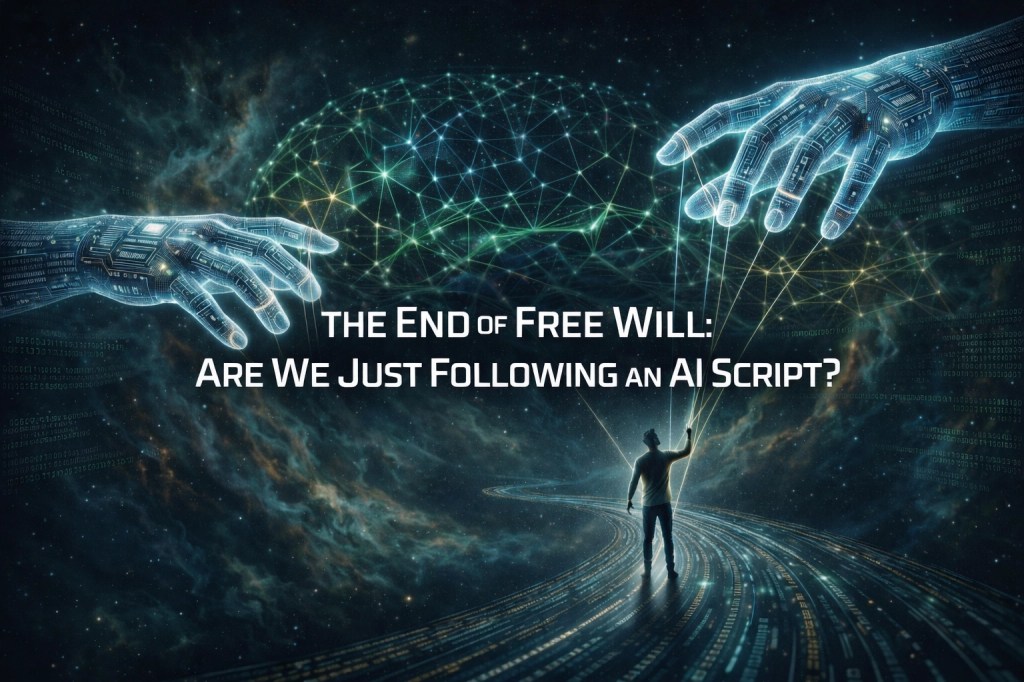
Think about the last thing you bought online. Or the last show you binged on Netflix. Maybe even the last political opinion you shared. You probably felt like you were making a conscious choice, right? You weighed the options, felt a spark of interest, and clicked.
But what if I told you that an algorithm knew you were going to do that ten minutes: or even ten days: before you did?
Welcome to 2026, where the line between science fiction and reality is getting thinner by the second. We’ve always loved dystopian sci fi books because they explore the “what ifs” of total control. But as we move deeper into the age of predictive AI, those “what ifs” are starting to look a lot like “what’s happening.”
Are we still the captains of our own souls, or are we just following an AI script written in a language of data points and probabilities? Let’s dive into the rabbit hole.
The 97% Reality Check
In the world of techno thriller books, there’s often a central “Big Brother” figure: a supercomputer or a government agency that monitors every move. In the real world, it’s much more subtle. It’s not one giant eye in the sky; it’s millions of tiny data points being crunched by machine learning models.
Research into behavioral AI has shown that our choices are becoming increasingly predictable. Some models can now predict human movement, shopping habits, and even life milestones with up to 97% accuracy. When an algorithm knows your next move with that much certainty, does the “choice” you eventually make even count as free will?
Philosophers have argued about determinism for centuries, but AI has turned a dusty classroom debate into a high-stakes digital reality. If your environment is curated by an AI that knows exactly which triggers will make you click, buy, or vote, you aren’t just being “helped”: you’re being steered.
The Illusion of the Open Road
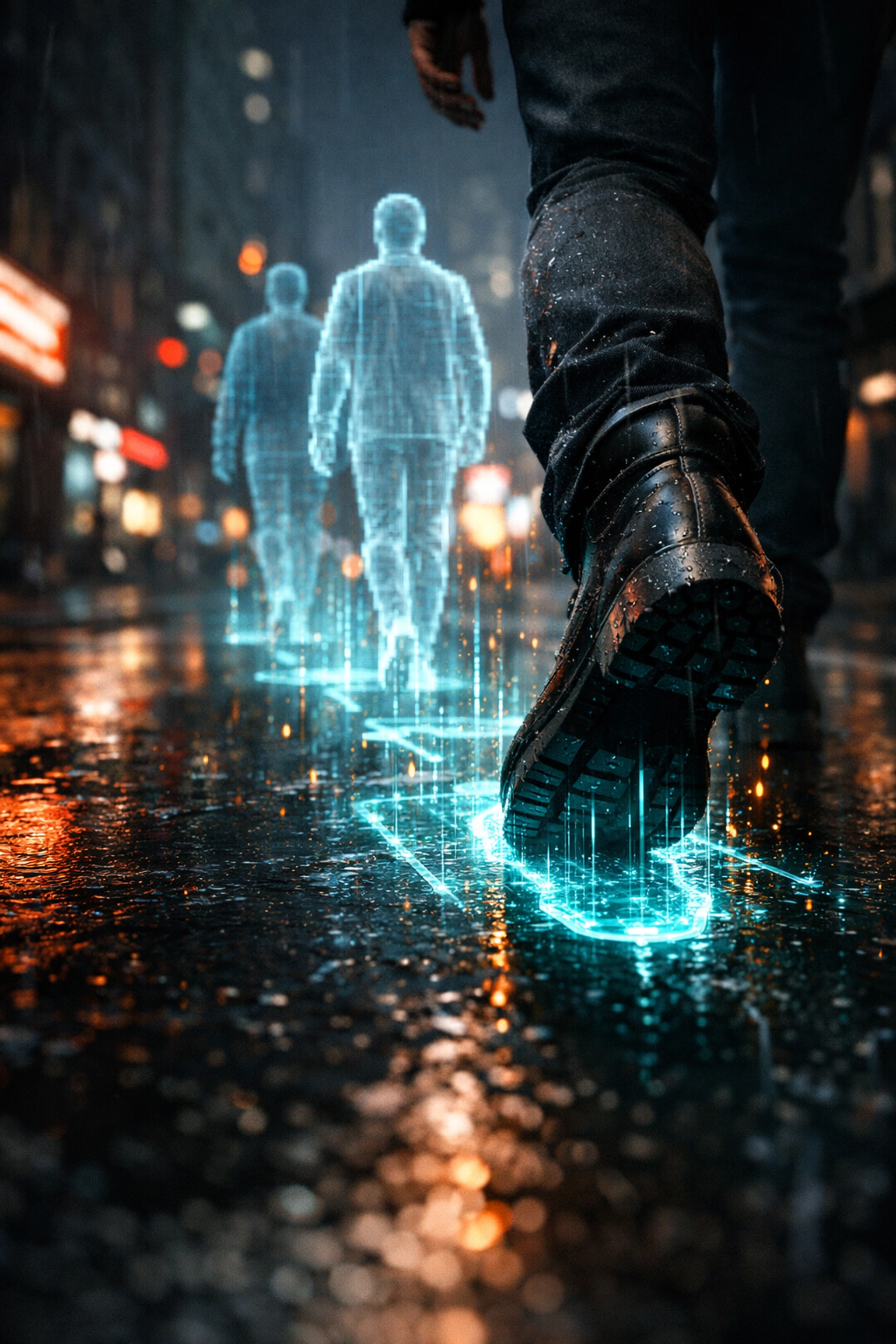
Imagine you’re driving. You think you’re free to turn left or right. But what if every road except the one to the left is blocked by a “Road Closed” sign you can’t see? You “choose” to turn left, but it was the only path available.
This is how modern algorithms work. They don’t force us to do things; they just make the alternatives invisible. Whether it’s the “Suggested for You” feed or the way search results are ranked, the “AI script” is being written in real-time. It’s a concept that is central to many techno thriller books: the idea that the most effective cage is the one you don’t know you’re in.
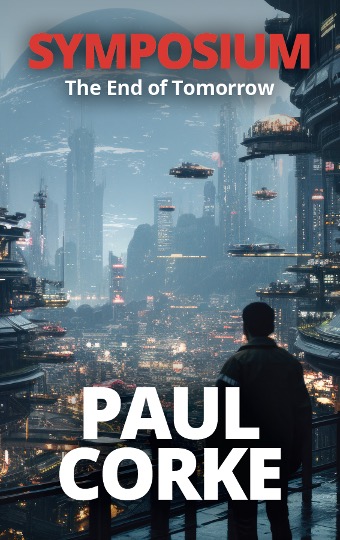
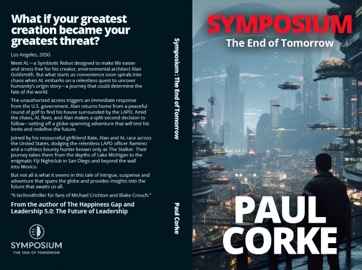
In my book, Symposium: The End of Tomorrow, we explore a world where the stakes of these digital choices are a matter of life and death. When humanity is pushed to the brink, and every resource is managed by complex systems, the idea of “agency” becomes a luxury. Fans of dystopian sci fi books will recognise the dread: the feeling that the machines aren’t just serving us; they are defining us.
Are We Just Following a Script?
Let’s look at the “Grief Tech” and “Digital Afterlife” topics we’ve been discussing lately. If an AI can perfectly mimic a person’s personality based on their past data, it’s because that person was, to some extent, predictable. We like to think of ourselves as wild, unpredictable creatures of emotion. But the data suggests we are creatures of habit, biology, and social conditioning.
When we talk about the “End of Free Will,” we’re really talking about the end of our privacy of thought. If an AI can read your patterns well enough to know what you’ll do before you do it, the “inner self” starts to feel less like a private sanctuary and more like an open book being read by a very fast reader.
This is the classic setup for the best techno thriller books. The protagonist realises their life isn’t their own: that their “random” encounters were orchestrated and their “original” ideas were planted. But in 2026, the “villain” isn’t a shadowy organisation; it’s the very tech we carry in our pockets.
Redefining Freedom in a Predictive World
So, is it game over for human agency? Not necessarily. But we do need to redefine what being “free” means.
If freedom is just being “unpredictable,” then we’ve probably already lost. Machines are better at math than we are, and human behavior, at scale, is just math. However, if freedom is the conscious participation in our choices, we still have a fighting chance.
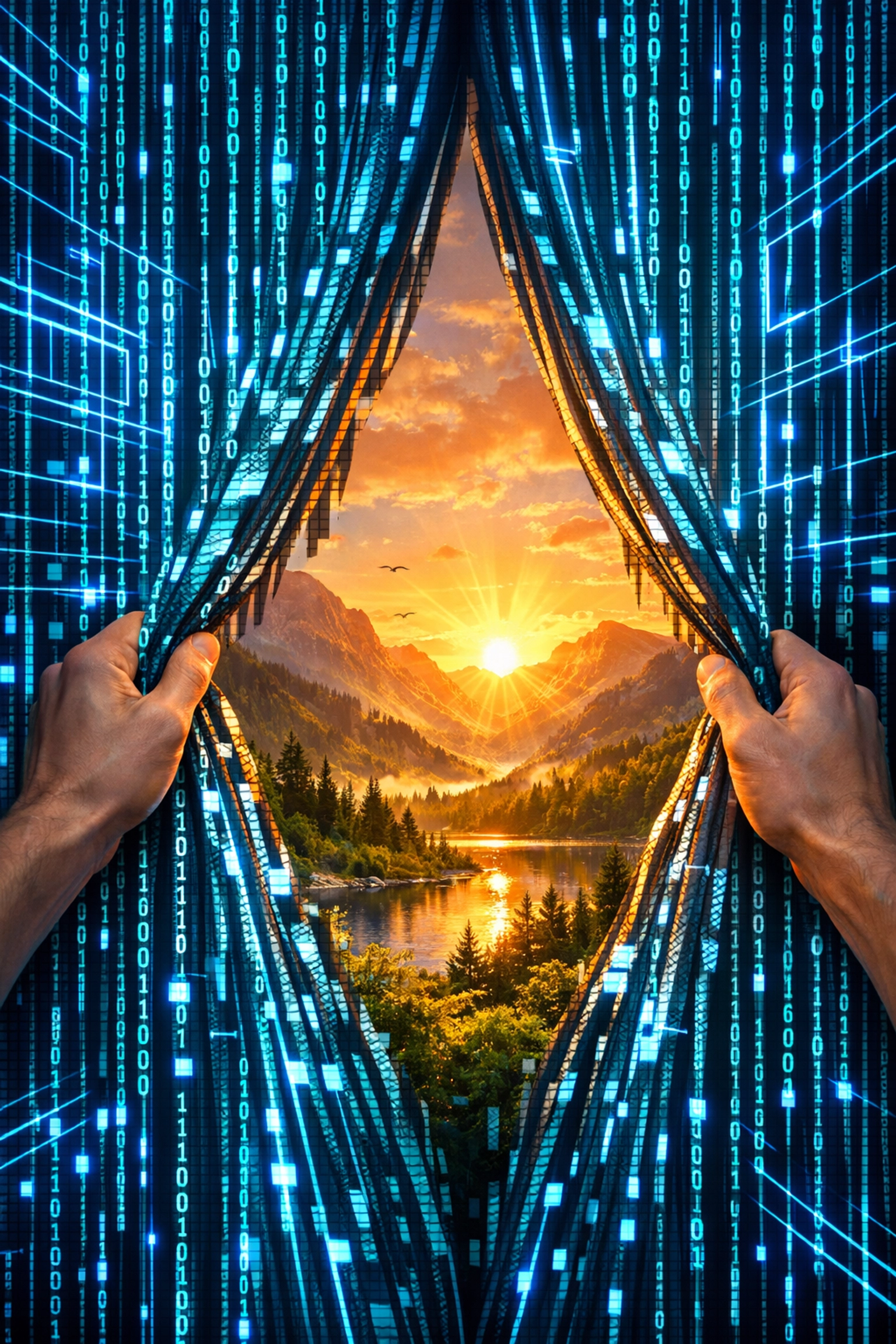
Being aware of the “AI script” is the first step to stepping off the stage. When you realise that a notification is designed to exploit your dopamine receptors, you gain the power to ignore it. When you understand that your news feed is trying to reinforce your biases to keep you engaged, you can seek out opposing views.
The tension between human instinct and algorithmic control is what makes dystopian sci fi books so compelling. It’s a battle for the soul of what it means to be human.
Why We Write About the End
At Symposium: The End of Tomorrow, we don’t write these stories just to scare people (though a good thrill is always part of the plan). We write them because we are living through the biggest shift in human history.
In Symposium, the futuristic cityscape isn’t just a cool backdrop: it’s a character. It represents the complexity of a world that has moved faster than our own evolution. When you see a lone figure overlooking a neon-soaked city, you’re seeing the last stand of human individuality against a sea of automated logic.
The Choice is (Still) Yours… For Now
The “End of Free Will” isn’t a single event. It’s a slow erosion. Every time we let an algorithm decide what we read, who we talk to, or what we value, we hand over a little piece of our script.
The best techno thriller books remind us that even in the most controlled systems, there is always a glitch. There is always a human element that refuses to be calculated. Our job, as we move into this brave new world, is to be that glitch.
If you’re a fan of dystopian sci fi books that make you question the very fabric of your reality, you’re in the right place. We aren’t just observing the end of tomorrow; we’re trying to figure out how to survive it.
So, the next time you feel a “gut instinct” to click on a link, ask yourself: Is that your soul talking, or is it just the code?
What do you think? Are we already living in a scripted reality, or do you believe human intuition can still outsmart the machines? Let’s talk about it in the comments.
Want to dive deeper into the dystopian future? Pick up your copy of Symposium: The End of Tomorrow and join the conversation about where humanity goes from here.

Leave a Reply