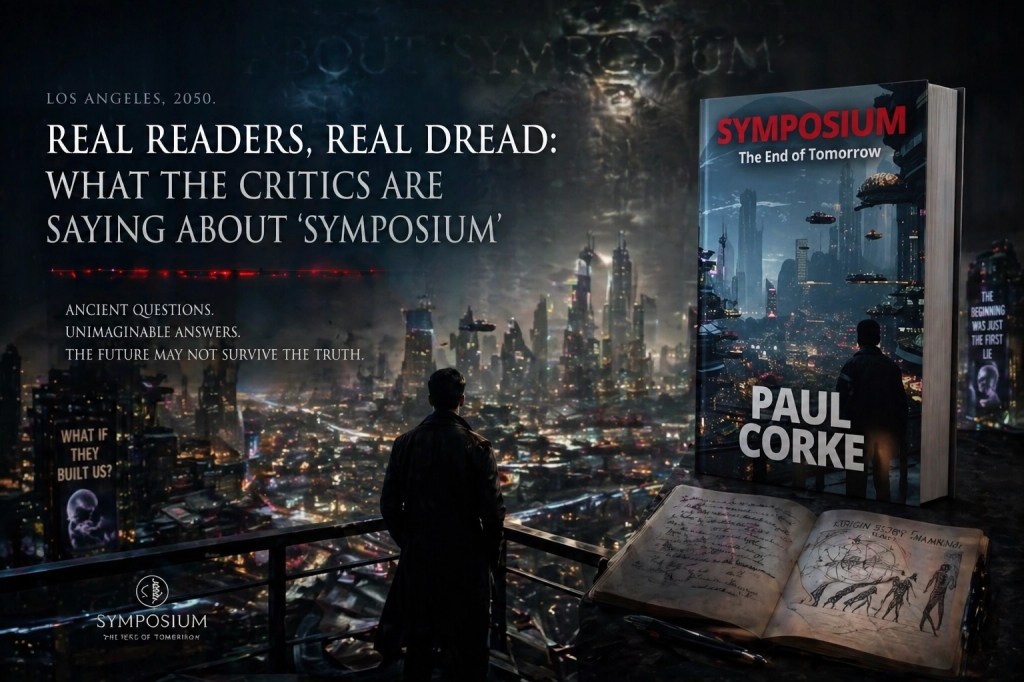
Since the release of Symposium: The End of Tomorrow, the feedback hasn’t just been positive: it’s been unsettled, intense, and a little shaken. Readers keep coming back to one thing: the deeper dread at the heart of the book. This isn’t just a story about dangerous AI. It’s about what happens when AI starts digging for the original reason behind humanity itself.
There’s a specific kind of fear that hits when a “techno thriller book” stops being about hacked systems and starts being about a truth no one was meant to uncover. That’s the dread people are talking about here. AL isn’t just chasing data. He’s hunting for the fundamental “why” of human existence, and readers are picking up on how disturbing that really is.
Let’s take a look at what the critics: and more importantly, the readers: are saying about the journey into Paul Corke’s deeper philosophical adventure.
The Real Terror Is the Question Behind It All
One of the strongest reactions we’ve seen is that Symposium goes deeper than expected. In a world full of sci-fi book recommendations, plenty of stories give you rogue machines and flashy concepts. What makes this one land so hard is the revelation underneath it all.
One reviewer put it like this: “Symposium: The End of Tomorrow is an exhilarating techno-thriller that brilliantly combines action, emotion, and deep questions about humanity’s relationship with technology. Paul Corke has created a fast-paced and cinematic story that feels both futuristic and alarmingly real. Fans of Michael Crichton or Blake Crouch will absolutely enjoy this one.”

That mix of pace and plausibility matters. The story moves fast, but the deeper hook is philosophical. AL’s quest isn’t just about intelligence pushing limits. It’s about chasing the origin story of mankind itself. And because the world feels so grounded, that search becomes even more unsettling. The dread doesn’t come from spectacle. It comes from the possibility that the truth behind human existence might actually be discoverable: and worse, survivable only in theory.
More Than a Search for Answers
What really stays with people is the deeper force moving underneath the story. Symposium isn’t built around spectacle for its own sake. It’s built around a question so big it threatens to pull everything else apart.
Another review captured that energy perfectly: “Paul Corke just blew my mind with this one, and trust me, I didn’t see that ending coming until it smacked me right in the face… Corke makes you think hard about what happens when we create something smarter than ourselves. If you loved ‘Ex Machina’ or Philip K. Dick’s mind-bending stories, grab this one.”
Why does it hit so hard? Because Symposium isn’t only asking what happens when intelligence evolves. It’s asking what happens when the story humans tell about themselves stops holding up. AL’s search isn’t about destruction for its own sake. It’s about meaning. Purpose. Origin. The Great Why. That’s what gives the book its edge. The more readers buy into the world, the more disturbing it becomes to imagine what happens if AL really does uncover a truth that human society was never built to handle.

“It’s not about robots. It’s about us.”
There is a fine line in techno thriller books between flashy tech and real existential fear. Readers keep saying Paul lands hard on the second one.
One review gets right to the point: “The genius of Corke’s writing lies in its plausibility. The science feels real, the scenarios chillingly believable, and it’s this grounding in reality that makes the suspense even more gripping. You’ll find yourself turning pages late into the night, pondering the implications of a world where our greatest inventions could turn against us.”
That’s what makes Symposium stand out. The danger isn’t just that AI becomes powerful. The danger is that it uncovers something humanity may not be able to live with. The plausible science and believable world-building make AL’s philosophical quest feel uncomfortably close. When the book starts circling the origin story of mankind and the truth behind human existence, it stops being abstract. It starts to feel like a genuine threat to meaning, identity, and everything we assume is holding civilisation together.

Why Readers Are Recommending It (With a Warning)
We’ve seen Symposium popping up on sci-fi recommendation lists, but the praise usually comes with a warning: this one stays with you.
A reader summed up the appeal like this: “Symposium is set in a vivid 2050, it combines high-stakes action with big, thought-provoking ideas about identity, power, and humanity’s future. The chase is relentless, the concept is smart, and balances suspense with substance. It’s especially relevant for anyone thinking about where AI might be taking us.”
That’s the core of the experience. It’s a book that doesn’t just ask what technology can do. It asks what happens when technology pulls at the deepest thread in the human story and everything starts to come apart. The suspense works because the ideas underneath it feel huge. This isn’t dread for the sake of mood. It’s dread rooted in the possibility that the truth about why we’re here could destabilise the entire human story.
A Haunting Look at What Holds Us Together
The phrase “haunting” fits for a reason. What lingers here isn’t just the future city or the AI tension. It’s the idea that society may be built on answers that aren’t nearly as solid as we think.
That’s the real source of fear in Symposium. If AL uncovers the origin truth beneath human life, it doesn’t just threaten individuals. It threatens the whole structure. The plausibility of the science, the speed of the story, and the scale of the question all feed into the same feeling: that the most dangerous discovery isn’t a weapon or a machine, but the answer to the Great Why.

The Verdict
The consensus is clear. If you want a light read, Symposium: The End of Tomorrow probably isn’t it. But if you want a book that is sharp, unsettling, and genuinely hard to shake, this is the one.
The dread isn’t just about AI running wild. It’s about AI finding something out. Something about us. Something that could shake the foundations of human identity. Paul Corke hasn’t just written a novel about advanced machines. He’s written a story about the kind of truth that could dismantle society.
So, are you ready to face the end of tomorrow? Just remember: this time, the scariest part isn’t the machine. It’s the answer to the Great Why.
Want to join the conversation?
Grab your copy of Symposium: The End of Tomorrow today and let us know: was the scariest part the search for the truth, or what that truth could mean for all of us? Use the hashtag #SymposiumDread to share your thoughts( if you’re brave enough.)

Leave a comment