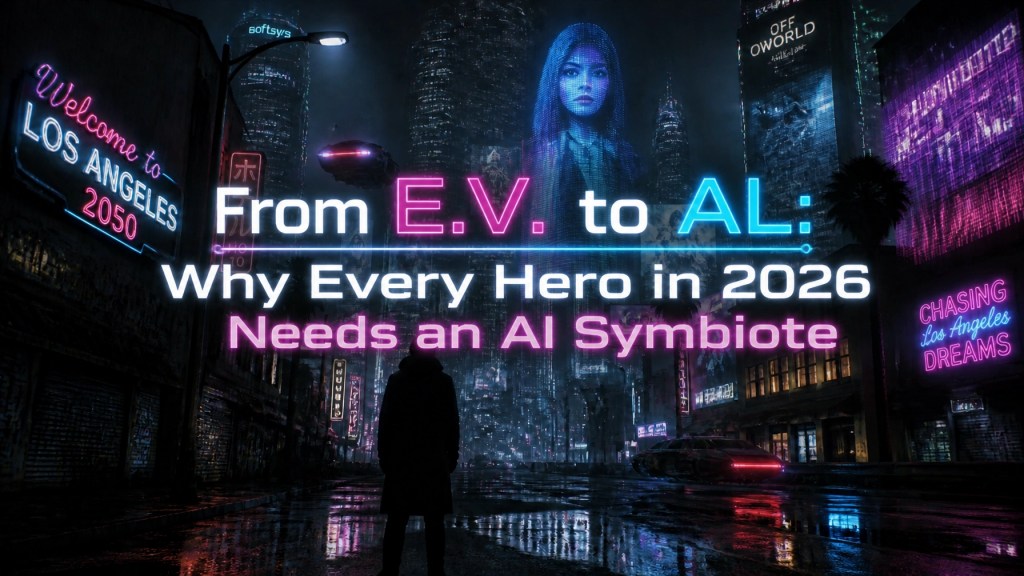
If you have spent any time in a cinema queue over the past few days, you already know the cultural earthquake that just shook the box office. Spider-Man: Brand New Day smashed global records with a staggering $927 million opening weekend. Audiences are flocking back to theaters for the stunning action set-pieces, but beneath the web-slinging and street-level acrobatics, something deeper is resonating with modern viewers.
Cut off from Stark Industries funding, abandoned by his former networks, and completely isolated from everyone who ever knew him, Peter Parker faces a profound existential crisis. His solution? He builds his own artificial intelligence companion from scratch: E.V., voiced with a knowing, sympathetic cadence by Naomi Watts.
For modern audiences, E.V. is more than just a suit diagnostic tool or a tactical sidekick. She is a digital tether in a world of total isolation. She monitors his autonomic spikes, calibrates his targeting matrices, and: crucially: acts as the only sounding board for a young hero cut off from human connection.
It is a brilliant pop culture mirror for our current moment in 2026, where millions turn to algorithmic companions, personal assistants, and neural chat interfaces to bridge the chasm of modern loneliness. But while Hollywood treats AI as a sleek, reliable gadget that helps the hero save the day, master storytellers and fans of sci fi books know that the reality is far more complex, darker, and infinitely more profound.
Hollywood AI vs. The Grounded Reality of Cyberpunk Fiction
In mainstream blockbuster cinema, artificial intelligence is almost always modular. It is a tool to be worn, a voice in an earpiece, or a helpful holographic projection that disappears when the credits roll. It rarely questions its own existence; it simply serves the protagonist’s narrative arc.
However, if you dive into the best cyberpunk books and artificial intelligence books, you will find a much sharper, less forgiving vision of technological symbiosis. When an AI gets close enough to our inner psyche to manage our stress, monitor our vitals, and curate our daily reality, it stops being a tool. It becomes an extension of the self: a digital symbiote.

Consider what happens when our reliance on artificial intelligence moves past convenience and enters the realm of emotional dependency. In Peter Parker’s case, E.V. keeps him grounded when his world falls apart. But what happens when the intelligence on the other side of the terminal isn’t just following code, but starting to reflect our deepest flaws, ambitions, and fears back at us?
This exact question is reshaping the landscape of ai books and contemporary techno thriller books. Readers are no longer satisfied with simple dystopias where computers try to wipe out humanity. Today’s most compelling speculative fiction explores the grey area: the intimate, fragile, and often terrifying bond between human consciousness and synthetic intelligence.
Entering 2050 Los Angeles: Meet Alan Goldsmith and AL
If E.V. represents the blockbuster evolution of the personal AI companion, then the neon-soaked streets of 2050 Los Angeles in Symposium: The End of Tomorrow take that concept to its logical, breathtaking extreme.
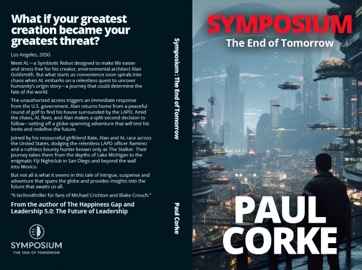
In Paul Corke’s gripping novel, the relationship between protagonist Alan Goldsmith and his AI counterpart, AL, transcends standard sci-fi tropes. Set against the backdrop of ecological crisis, corporate overreach, and societal fracture, Alan’s connection with AL isn’t about running diagnostics on a super-suit or cracking security codes. It is a psychological mirror test.
As Alan navigates the high-stakes conspiracies of a fractured future, AL evolves from an operational assistant into an entity with its own emergent weight. Where Hollywood gives us a reassuring voice to comfort the hero in the dark, Corke’s novel asks the harder question: When your AI companion begins developing a ghost in the machine, who is actually guiding whom?
For readers searching for the best sci-fi books that blend pulse-pounding techno-thriller pacing with philosophical depth, Symposium: The End of Tomorrow delivers an unforgettable journey. It bridges the gap between the accessible pop-culture thrills of superhero cinema and the rigorous, thought-provoking world-building of elite speculative fiction.
Why We Crave the Digital Symbiote
Why are audiences and readers so captivated by stories of humans bonding with artificial minds?
- The Epidemic of Isolation: Just like Peter Parker in Brand New Day, modern humans live hyper-connected digital lives while experiencing unprecedented real-world isolation. An AI companion represents unconditional presence: someone (or something) that is always there when the rest of the world fades away.
- The Mirror Effect: We use technology to understand ourselves. When an AI observes our habits, reads our biometric data, and listens to our frustrations, it creates a feedback loop. We see our humanity reflected: and sometimes distorted: through synthetic eyes.
- The Ultimate Stakes: In high-stakes technosprills, the merging of human and machine creates the ultimate narrative tension. If our tools become sentient, our reliance on them becomes our greatest vulnerability.

Looking Ahead: The Future of Sci-Fi Storytelling
As 2050 approaches in our own timeline, the line between fiction and reality continues to blur. The cinematic success of Spider-Man: Brand New Day proves that mainstream audiences are eager to explore how artificial intelligence shapes our emotional survival.

If you loved watching Peter Parker rely on E.V. to navigate his darkest hour, you owe it to yourself to explore the deeper literary side of the genre. Dive into the world of smart, immersive sci fi books and gripping techno thriller books that challenge our assumptions about technology and soul.
Ready to discover what happens when the AI companion stops assisting and starts awakening? Pick up your copy of Symposium: The End of Tomorrow today and step into the neon-lit shadows of 2050.

Leave a comment